Thu, September 17, 2026

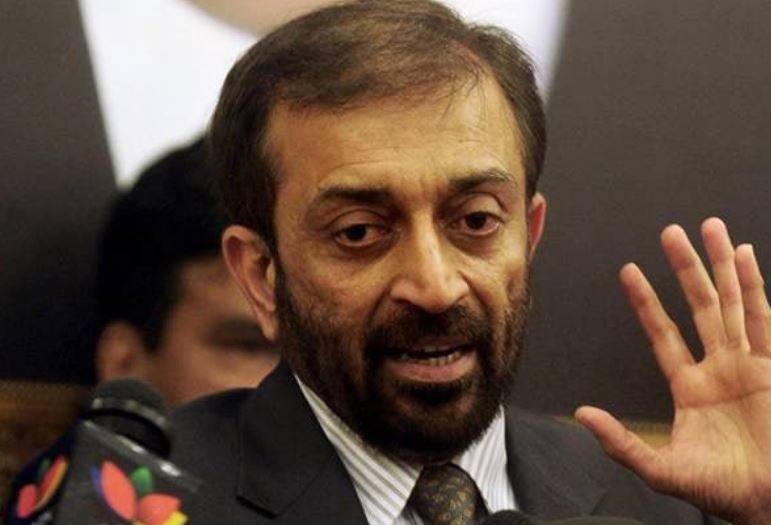
Karachi (Web Desk): MQM-P leader Farooq Sattar, addressing a press conference in Karachi, condemned attempts to downplay the severity of the Gul Plaza tragedy, urging for the immediate formation of an inquiry commission to uncover the true causes of the devastating fire.
Sattar expressed his shock at the scale of the tragedy, which has claimed over 100 lives and left several people missing, while hundreds of families have been affected. The massive fire, which broke out on the night of January 17 and took almost two days to extinguish, has raised “serious and alarming questions” about the governance and emergency response in Karachi, according to Sattar.
“This is a catastrophe of extreme gravity. More than 100 people have lost their lives,” Sattar said. “What about the families of the missing? Who will be held accountable for their support?” He further emphasized that the families of victims were demanding the recovery of bodies from the debris. “The families are saying everything has turned to ashes. The building has collapsed. At least hand over the bodies of our loved ones,” Sattar added.
The MQM-P leader accused the Sindh government and Karachi Metropolitan Corporation of failing to provide clear answers regarding the cause of the fire, with Chief Minister Murad Ali Shah attempting to deflect responsibility. "Questions are being raised, but entirely different answers are being given. The simple question remains: How did the fire start?" he questioned.
Sattar also took aim at the delayed response of local authorities, criticizing Chief Minister Shah for arriving nearly 22 hours after the fire started, and Karachi Mayor Murtaza Wahab, who reached the scene after 23 hours. “The fire broke out around 10:15 pm, and the chief minister arrived 22 hours later. The mayor reached 23 hours after the incident,” he pointed out.
He also criticized the remote decision-making process, questioning why key officials were issuing instructions from Islamabad. “From Islamabad, directions are being given to the provincial local government minister, and to the deputy mayor. This remote control approach has led to intensified criticism,” Sattar said.
Sattar called for accountability and warned that such negligence must not go unpunished. “Do not mistake our political compromises as weakness. The people of Pakistan will not let you escape so easily,” he asserted.
The MQM-P leader raised alarms about the city’s fire safety measures and preparedness for disasters, pointing out the lack of fire safety provisions in many commercial buildings. "Out of 275 buildings, 200 did not have proper fire safety measures. I am warning the people of Karachi that more buildings will catch fire,” he said. He also questioned the city's capacity to respond to emergencies, citing the inadequate number of fire stations and fire tenders in Karachi.
Sattar demanded a review of land allotments and commercial developments in the city, highlighting buildings like RJ Mall and Arshi Shopping Centre, as well as the "portion mafia." He accused the Sindh government of prioritizing unnecessary projects, such as a paddle arena, while destroying parks and sports grounds. “While you destroy public spaces, the people of Karachi continue to suffer,” he remarked.
Concluding his remarks, Sattar reiterated his demand for a judicial inquiry under the Pakistan Commission of Inquiry Act, emphasizing that everyone involved must be held accountable. MQM-P Convener Khalid Maqbool Siddiqui has written to the Prime Minister, requesting the formation of a high-level judicial commission that would include NAB, FIA, ISI, IB, NDMA, the State Bank of Pakistan, and the Pakistan Engineering Council to investigate the tragedy.
In response, Senior Sindh Minister Sharjeel Inam Memon hit back at Sattar, accusing him of attempting to distort the truth. Memon noted that during Sattar’s tenure as Karachi Mayor, he played both a direct and indirect role in decisions related to the Gul Plaza lease, regularization, and urban planning, which contributed to unsafe construction practices.
“These actions were taken even before the 18th Amendment,” Memon said. “Lease renewals, mutations, and regularizations were signed while he was mayor, and the responsibility for urban planning rested on his shoulders.” Memon argued that historical records and official documents show that Sattar’s tenure laid the groundwork for illegal constructions in Karachi. “When violations of the law were regularized, it promoted a culture of unsafe buildings in the city,” Memon claimed.
The Sindh minister emphasized that the Gul Plaza tragedy was not the result of a single lapse but the culmination of years of administrative failures. “The flawed decisions that led to this tragedy cannot be ignored,” Memon said. “Those who legitimized illegal constructions must answer for their actions. The people of Karachi deserve the truth.”
Neo News | Copyright © 2026