Thu, September 17, 2026

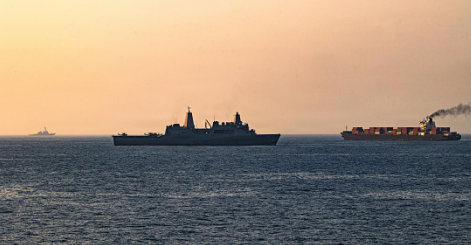
Tehran (Web Desk): Iran’s parliament speaker on Wednesday said the Islamic Republic would not allow the Strait of Hormuz to be reopened while what it described as a US naval blockade remained in effect, calling the situation a “blatant violation of the ceasefire”.
“A complete ceasefire only has meaning if it is not violated through a naval blockade… reopening the Strait of Hormuz is not possible amid a blatant violation of the ceasefire,” speaker Mohammad Bagher Ghalibaf said on X.
His remarks came at a time when tensions continued to run high, even as U.S. President Donald Trump extended a two-week ceasefire and indicated that discussions with Iran could restart within the next 36 to 72 hours.
According to Trump, the extension followed a request from Pakistan to provide additional time for diplomatic efforts and to allow Iran to present a proposal. He also maintained that the U.S. naval blockade would stay in place until a formal agreement was reached.
Iran, however, has ruled out engaging in negotiations under what it considers conditions of military coercion.
Foreign Ministry spokesperson Esmaeil Baghaei said diplomacy remains an instrument to safeguard national interests, but stressed it would only be pursued when circumstances are aligned with Iran’s own priorities.
While acknowledging Pakistan’s role in trying to de-escalate the conflict, he said Tehran was adopting all necessary steps to protect its security and sovereignty, adding that recent developments amounted to self-defense in response to what Iran described as U.S. and Israeli military aggression.
He further argued that the ongoing restriction on Iranian ports, the seizure of commercial ships, and continued threats of strikes had made serious negotiations extremely difficult.
Earlier, Iran’s semi-official Tasnim news agency reported that Tehran had made a “definitive” decision not to take part in a second round of peace talks with the United States in Islamabad, and that Pakistani mediators had already been informed.
Pakistan, which has been facilitating communication between Washington and Tehran, has urged the United States to lift the blockade and release an Iranian vessel along with its crew to create room for diplomatic progress.
Prime Minister Shehbaz Sharif, meanwhile, expressed gratitude to Trump for extending the ceasefire and voiced hope that both sides would continue respecting the truce and eventually reach a comprehensive peace settlement.
At the same time, Iran’s Islamic Revolutionary Guard Corps (IRGC) announced that it had taken control of two vessels attempting to transit through the Strait of Hormuz without authorization.
The IRGC Navy identified the ships as MSC Francesca and Epaminondes, claiming they posed a threat to maritime security by operating without proper permits and interfering with navigation systems.
The vessels were redirected toward Iran’s coastline, heightening already serious concerns about safety in the vital waterway, which handles a significant share of the world’s oil trade.
The Strait of Hormuz continues to sit at the center of the dispute, with Iran using its strategic location as leverage while the United States maintains pressure through its naval presence in the region.
Neo News | Copyright © 2026