Tue, September 22, 2026

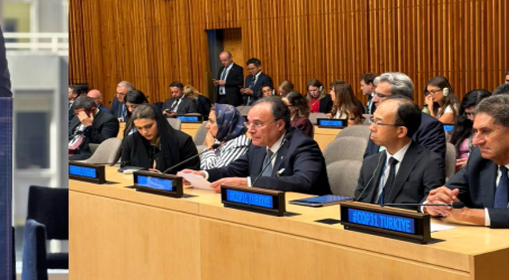
New York (Web Desk): Federal Minister for Finance and Revenue Senator Muhammad Aurangzeb has outlined Pakistan’s progress towards developing a regulated system for virtual assets, while reaffirming the country’s resolve to advance climate action and implement its national climate commitments at international forums in New York.
Speaking at the “United Nations Digital Cooperation Day 2026 – Blockchain and the Tokenized Future: Sovereign Choices and Safeguards for Next-Gen DPI” in New York, Aurangzeb said the adoption of tokenization should be driven by genuine economic requirements.
These include lowering the cost of remittances, expanding financing opportunities for small and medium-sized businesses, supporting sovereign debt and widening access to financial services, according to a Finance Ministry press release issued on Tuesday.
He said innovation led by the private sector must operate alongside effective government safeguards, accessible digital infrastructure and greater international collaboration.
The minister further emphasized that emerging economies should have a proper role in determining international standards for new digital technologies.
Finance Minister Highlights Pakistan’s Climate Resilience, Transition Towards Regulated Virtual Assets and Climate Action Priorities in New York Federal Minister for Finance and Revenue, Senator Muhammad Aurangzeb, participated in a series of high-level engagements in New York, USA on the first day of his visit, during the UNGA High-Level Week of the 81st Session of the United Nations General Assembly. Across these engagements, the Finance Minister highlighted Pakistan’s climate vulnerability, disaster-response priorities, the opportunities presented by digital transformation and tokenisation, and the importance of translating climate commitments into practical and investable actions. At the World Economic Forum’s “Financing Planet and Prosperity” meeting, the Finance Minister highlighted Pakistan’s acute vulnerability to climate-related disasters, particularly floods affecting infrastructure and communities. He outlined the Government’s efforts to strengthen disaster-response frameworks, early-warning systems, and costed climate-investment plans, while emphasising that external assistance must be complemented by domestic resources and fiscal buffers. Senator Muhammad Aurangzeb referred to the mobilisation of financing through the World Bank, Asian Development Bank and international capital markets for relief, adaptation, and reconstruction. At the same time, he cautioned against complacency and called on international climate funds, including the Green Climate Fund and the Loss and Damage Fund, to simplify their procedures and accelerate access to financing. The Finance Minister’s engagements also focused on the role of digital innovation in expanding economic opportunities and strengthening financial inclusion. In his opening remarks at the “United Nations Digital Cooperation Day 2026 – Blockchain and the Tokenized Future: Sovereign Choices and Safeguards for Next-Gen DPI,” Senator Muhammad Aurangzeb highlighted Pakistan’s transition towards a regulated virtual-assets framework. He emphasised that tokenisation must address real economic needs, including cheaper remittances, SME financing, sovereign debt, and broader financial access. He stressed that private-sector innovation should be supported by strong state safeguards, inclusive digital infrastructure, and international cooperation, with emerging economies fully involved in shaping global standards. Building on the broader focus on climate action and development financing, Senator Muhammad Aurangzeb also participated in the launch of the COP31 Action Agenda, where he expressed Pakistan’s full support for the agenda, noting its strong alignment with the country’s national climate priorities and NDC 3.0. He highlighted Pakistan’s acute climate vulnerability and emphasised shared priorities, including clean energy and electrification, renewable-energy expansion, energy-efficient buildings, climate-resilient cities, climate education and public awareness, food security, and climate-resilient agriculture. Welcoming the proposed Climate Implementation Bridge, the Finance Minister described it as a mechanism for translating NDC commitments into investable and bankable projects. He stressed that the principal challenge was no longer the formulation of plans but their effective implementation and commended the agenda’s clearly defined action points and key performance indicators, describing it as practical, impact-oriented and focused on measurable results.
— Ministry of Finance, Government of Pakistan (@Financegovpk) September 22, 2026
Aurangzeb also addressed the launch of the COP31 Action Agenda, expressing Pakistan’s full support for the initiative and pointing out that its objectives are closely linked with the country’s national climate priorities and Nationally Determined Contribution (NDC) 3.0.
Drawing attention to Pakistan’s serious vulnerability to climate change, he identified several common areas of focus, including clean energy and electrification, greater use of renewable energy, energy-efficient buildings, climate-resilient urban centres, climate education and public awareness, food security and climate-resilient agriculture.
Aurangzeb welcomed the proposed Climate Implementation Bridge, which aims to convert NDC commitments into projects that can attract investment and secure financing. Aurangzeb said the main difficulty is no longer preparing climate plans but ensuring that those plans are translated into effective action.
The finance minister also appreciated the Action Agenda for establishing specific areas of action and key performance indicators, describing the framework as practical, focused on impact and designed to deliver measurable outcomes.
Neo News | Copyright © 2026