Thu, September 17, 2026

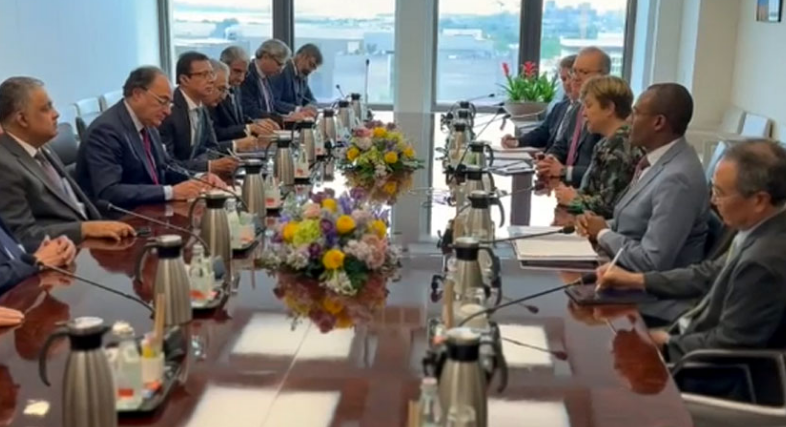
Washington (Web Desk): Finance Minister Muhammad Aurangzeb has reaffirmed Pakistan’s commitment to pursuing ongoing economic reforms and ensuring stability during a series of high-level meetings in Washington D.C.
He expressed gratitude to the International Monetary Fund (IMF) for reaching a Staff-Level Agreement on the First Review under the Extended Fund Facility (EFF) and securing a new deal under the Resilience and Sustainability Facility (RSF), underscoring the importance of these agreements in maintaining the reform agenda, the Radio Pakistan reported.
In a separate meeting with World Bank President Ajay Banga, the minister thanked the institution for its longstanding support and praised the development of the new Country Partnership Framework (CPF).
This framework, designed as a decade-long plan, focuses on achieving measurable outcomes that are essential for the country’s development.
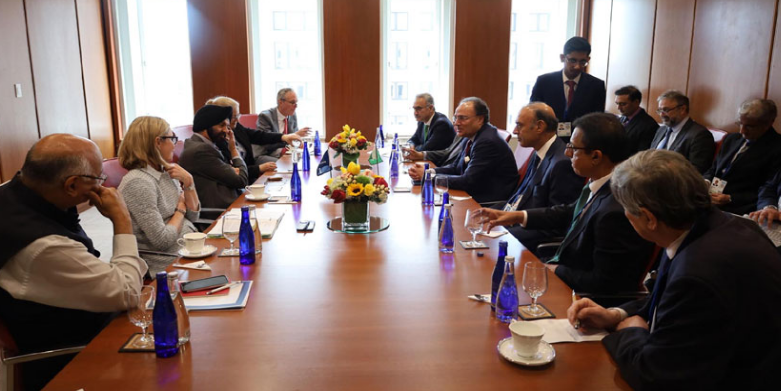
Aurangzeb also highlighted the World Bank’s ongoing efforts in assisting Pakistan with a detailed implementation strategy, aimed at increasing the efficiency of the country’s development programs.
The finance minister also met with Assistant Secretary US Department of the Treasury Robert Kaproth, where he updated him on Pakistan’s improving economic indicators.
He outlined various reform measures, including those in the taxation system, energy sector, privatization, and state-owned enterprises, along with efforts to enhance pension management and restructure national debt.
At a luncheon hosted by the US-Pakistan Business Council at the US Chamber of Commerce, the minister engaged with American business leaders, providing insights into Pakistan’s economic reforms and emphasizing the potential for expanding regional trade, diversifying markets, and fostering growth across various sectors.
Aurangzeb also extended his appreciation to the US delegation for their participation in the Pakistan Mineral Investment Forum 2025, highlighting the country’s focus on growing its mining and minerals sector through international partnerships.
The finance minister also met with Mohamed Nasheed, the Secretary General of the Climate Vulnerable Forum, where he discussed collaborative efforts to develop the Climate Prosperity Plan (CPP).
This initiative is aimed at identifying financing sources for climate-resilient projects, with the support of the IMF’s RSF, ensuring that climate-related projects are phased in with sustainable financing mechanisms.
Neo News | Copyright © 2026