Thu, September 17, 2026

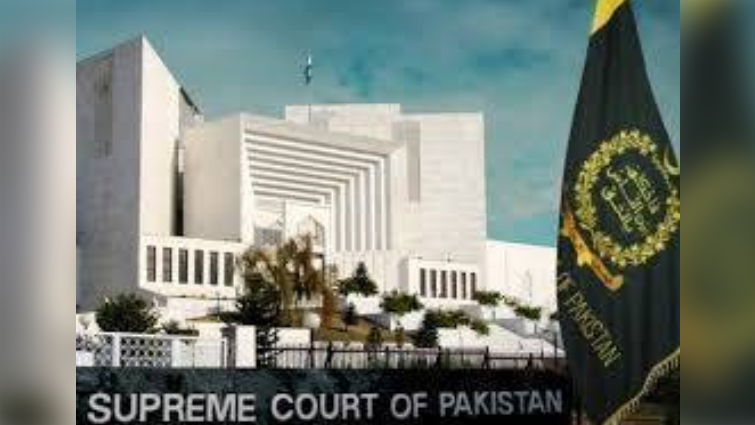
Islamabad (Web Desk): The Supreme Court (SC) on Thursday granted bail to Pakistan Tehreek-e-Insaf (PTI) founder and former premier Imran Khan in eight cases related to May 9, 2023 riots.
A three-member SC bench, headed by Chief Justice of Pakistan (CJP) Justice Yahya Afridi and including Justices Hasan Azhar Rizvi and Muhammad Shafi, delivered the verdict on the plea filed by the PTI founder challenging the Lahore High Court's (LHC) refusal to grant him bail.
Earlier in June, the LHC had rejected the former premier’s bail pleas in multiple cases linked to the May 9 riots, which involved an attack on Jinnah House in Lahore.
Having spent over two years in custody, the PTI leader appealed to the SC against the LHC’s decision, arguing that the initial investigation report lacked substantial evidence and dismissed accusations of his involvement in the unrest as unfounded.
In his petition, the PTI founder maintained that he was detained by the National Accountability Bureau (NAB) at the time the riots occurred, making it impossible for him to participate in the riots.
The appeal also raised concerns over contradictions in the prosecution's accounts and questioned the credibility of the delayed police statements, suggesting potential ill intentions behind the delayed arrest.
The plea further requested a more thorough inquiry into the case, asserting his entitlement to bail.
During today’s hearing, CJP Afridi scrutinized the prosecution’s claims against Imran Khan in connection with the May 9, 2023, unrest.
When Prosecutor Zulfiqar Naqvi was asked to present evidence against the former prime minister, he cited statements from three witnesses, as well as the results of photogrammetric and voice matching tests.
He also informed the court that WhatsApp messages were available as part of the case file.
Naqvi further noted that while the trial court had authorized multiple forensic examinations, the suspect declined to participate in those procedures.
At this point, CJP Afridi cautioned the prosecutor against framing the narrative to appear one-sided. He emphasized that the legal process must unfold according to the rules and that any findings should come from the trial court, not the apex court.
The CJP reminded Naqvi that presenting such evidence at this stage could carry legal consequences and advised him to seek rulings from the appropriate judicial level.
Justice Rizvi also weighed in, inquiring whether any further inquiry had been undertaken following the granting of post-arrest bail to Khan on May 14 and whether the suspect had since cooperated with investigators.
Responding to continued assertions by Naqvi, who maintained that Khan played a central role in all the cases linked to the May 9 incidents, PTI founder’s lawyer Salman Safdar, countered that no charge sheet had been filed against his client in any of the eight FIRs under discussion. He clarified that Khan had only been officially named in three of them, with no reference to him in the remaining five.
The CJP Afridi reiterated that the top court must refrain from commenting on the merits of the evidence to avoid prejudicing the ongoing trial. He then verbally delivered the court’s decision to approve Imran Khan’s bail applications in the eight cases stemming from the May 9 riots.
These cases trace back to the violent demonstrations that erupted following Khan’s arrest from the premises of Islamabad High Court (IHC) in a corruption-related matter on May 9, 2023.
During the demonstrations, the miscreants targeting both military and government properties, including the Corps Commander’s residence in Lahore and the General Headquarters (GHQ) in Rawalpindi.
Although many PTI leaders and activists secured bail in the aftermath, several remain in custody.
Neo News | Copyright © 2026