Thu, September 17, 2026

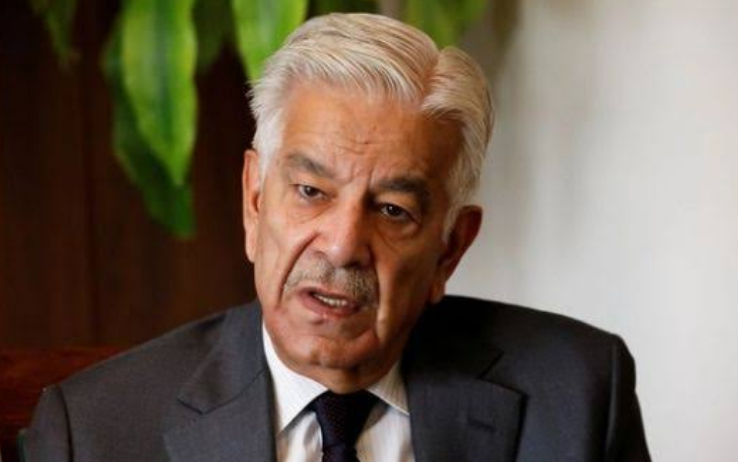
Islamabad (Web Desk): Defence Minister Khawaja Muhammad Asif has accused India of fueling terrorism in Pakistan through what he described as a coordinated “proxy war,” alleging that the Taliban-led administration in Kabul is complicit in the ongoing violence.
In a conversation with France 24, Asif asserted that nearly every major militant outfit currently active in Pakistan has managed to operate due to what he termed the Kabul government’s lack of seriousness in tackling extremism. He argued that the situation reflects more than mere inaction, suggesting that “complicity” is a more accurate description.
Highlighting the country’s fragile security landscape, the minister referred to the recent bombing at a mosque in the federal capital that caused multiple deaths and injuries, saying the incident illustrates the persistent threat posed by militant groups.
Asif warned that Pakistan would not shy away from launching further cross-border strikes into Afghanistan if required, unless authorities in Kabul are prepared to “underwrite peace” and take concrete measures to stop militant elements from targeting Pakistan.
He went on to claim that India is deliberately pursuing a strategy aimed at destabilising Pakistan, alleging that New Delhi and Kabul are aligned in their approach when it comes to actions against Islamabad.
When asked whether Pakistan would consider contributing troops to an international stabilisation mission in Gaza, the defence minister said any decision would depend entirely on the “terms of reference” governing such a force.
He pointed out that Pakistan has extensive experience participating in United Nations peacekeeping missions and described potential involvement in Gaza as a constructive opportunity to support efforts toward a two-state solution in the Middle East
Addressing the prospect of normalising relations with Israel, Asif stated that the matter is “not even being considered.” He ruled out any such move unless Palestinians are granted “the right of self-determination in their own homeland” as part of a viable two-state framework.
Neo News | Copyright © 2026