Thu, September 17, 2026

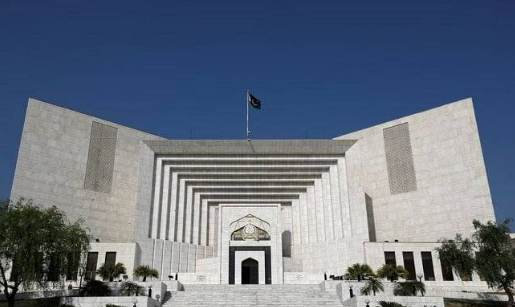
Islamabad (Web Desk): The federal government on Wednesday moved the Supreme Court (SC) to review its decision allowing jailed Pakistan Tehreek-e-Insaf (PTI) founder Imran Khan to Shifa International Hospital for a medical evaluation and necessary treatment.
Islamabad chief commissioner, on behalf of the federal government, filed the petition through the advocate general for the Islamabad Capital Territory (ICT).
The development follows the SC’s ruling issued a day earlier, ordering Adiala Jail authorities to facilitate the PTI founder’s transfer to Shifa Hospital within two days for comprehensive medical evaluation and treatment.
The top court also directed the authorities to present former premier’s full medical history and instructed the PTI to avoid turning his health condition into a political controversy.
In its review petition, the government maintained that Khan was handed a three-year prison sentence by an Additional Sessions Judge on August 5, 2023, following which he challenged the conviction before the Islamabad High Court (IHC).
As per the petition, the PTI founder subsequently sought permission to be shifted to Shifa International Hospital for medical treatment. However, the IHC turned down the request on March 12, prompting him to approach the Supreme Court against the decision.
The federal government contended that the transfer of a prisoner to a hospital in certain circumstances requires government approval and must be carried out through the Inspector General (IG) of Prisons.
It further submitted that a prisoner sent to a medical facility is required to remain under police custody and supervision. The petition also cited Rule 197 of the Pakistan Prison Rules, 1978, which prescribes the mechanism for moving an inmate from a prison to a hospital.
The government maintained that Article 10-A of the Constitution guarantees every individual the right to a fair trial and due process of law.
It argued that the case had reached the SC for the first time and that notices had not been issued to the relevant parties before the interim order was passed.
The petition also pointed out that Khan had undergone medical examinations on a regular basis in the past and had been examined and treated by medical boards on multiple occasions.
The government further contended that the top court should have sought an assessment from qualified medical experts before directing Khan’s transfer to a hospital on medical grounds.
In its order issued on Tuesday, the SC had directed the formation of a medical board to examine and provide treatment to Khan.
The court also ordered that Dr Uzma, along with the former premier’s personal physician, should be present during his medical examination and treatment, with all related expenses to be covered by Khan’s family.
The authorities were instructed to move the PTI founder to the hospital under stringent security arrangements and make all necessary preparations within a few days.
The court also cautioned that failure to comply with its directives could lead to the withdrawal of the facilities currently available to Khan.
After the SC decision, the PTI welcomed the ruling and appealed to its supporters not to assemble outside the hospital where the party founder would be receiving treatment.
Meanwhile, Law Minister Azam Nazeer Tarar on Tuesday said that the government had decided to approach the SC for a review of its order directing the transfer of PTI founder to Shifa International Hospital for medical examination and treatment.
The minister said that the government had carefully examined various aspects of the SC’s judgment and written order.
Following the review, he said, the government would seek reconsideration of the decision from the apex court.
Tarar pointed out that a large number of prisoners across the country were also suffering from different health-related issues.
He said convicted prisoners were provided medical treatment at government hospitals whenever required.
The law minister also questioned whether the SC’s decision would be applicable to all prisoners facing health problems.
Tarar added that the government had assessed both the legal and administrative implications of the court’s order before deciding to seek a review.
Neo News | Copyright © 2026