Fri, September 18, 2026

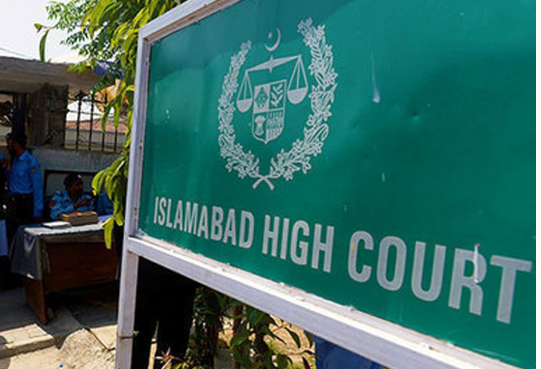
Islamabad (Web Desk): The Islamabad High Court (IHC) has declared that any measure interfering with the fundamental rights of citizens would amount to a breach of the Constitution. The court also warned that government officials who fail to safeguard these rights could be held responsible for violating the law as well as the oath they have taken.
The ruling was issued by a larger bench consisting of Chief Justice Sardar Muhammad Sarfraz Dogar, Justice Muhammad Azam Khan and Justice Muhammad Asif in a detailed 37-page judgment on a petition filed by trader Waqas Ahmad over the Pakistan Tehreek-e-Insaf’s (PTI) planned march towards Islamabad on September 27.
The bench acknowledged that political parties have a constitutional entitlement to peaceful demonstrations and political disagreement. However, it said this right must coexist with the rights of ordinary citizens, including protection of life, liberty, dignity, freedom of movement and the ability to conduct business.
The court stressed that political protest cannot be exercised outside the limits set by the Constitution and the law.
The judgment referred to Article 15, under which citizens have the right to move freely across the country, while Article 16 protects peaceful and unarmed gatherings.
The IHC noted that any limitations placed on such assemblies must have a legal basis and be reasonably necessary in the public interest. It also cited Article 17, which protects the formation of associations and unions but allows lawful restrictions for maintaining public order.
The bench stressed that constitutional institutions in Islamabad must continue functioning without interruption, while people must also be able to reach hospitals, educational institutions and courts.
The court also examined the record of earlier political demonstrations and expressed concern over repeated instances in which commitments made before courts and judicial instructions were allegedly not honoured. It pointed out that an undertaking given before the Supreme Court had allegedly been violated by the PTI founder.
The bench also referred to an earlier High Court ruling concerning the November 2024 protest, which, according to the judgment, was not implemented.
The IHC said the present matter could not be dismissed as a case founded merely on conjecture because it involved what the court viewed as a pattern of non-compliance with judicial orders and assurances by a political party. The judgment also highlighted the previous use of Khyber Pakhtunkhwa government resources during a political march. According to the court, diverting provincial resources for such purposes could compromise the fundamental rights of people living in Islamabad.
The bench further ruled that an attempt by a provincial government entity to confront the federation through a march, rally or procession would be contrary to the Constitution and the law.
It categorically stated that public money, official vehicles, government machinery or state employees could not be utilised to facilitate a political march towards Islamabad.
The court maintained that peaceful demonstrations remain constitutionally protected, but that protection does not extend to armed marches or political activities conducted with government resources.
It observed that bringing normal civic activities, commercial operations, education and citizens’ movement to a standstill in order to pressure the federal capital cannot be presented as an exercise of the constitutional right to protest.
The bench also clarified that the right to organise a long march is not unrestricted and must be exercised within the framework of the law.
It held that besieging Islamabad or depriving citizens of their fundamental rights cannot be claimed as a constitutional entitlement. The petition was ultimately disposed of in accordance with the directions laid down by the court.
Neo News | Copyright © 2026