Thu, September 17, 2026

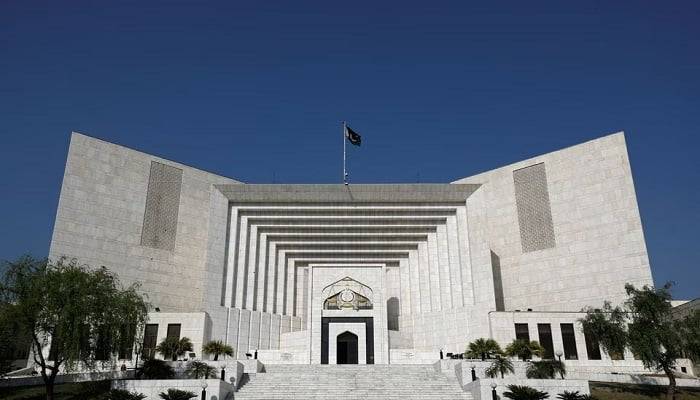
Islamabad (Web Desk): The Supreme Court (SC) on Tuesday directed the authorities at Adiala Jail to shift Pakistan Tehreek-e-Insaf (PTI) founder and former premier Imran Khan to Shifa International Hospital for a medical evaluation and necessary treatment until the next hearing.
The court also ordered the authorities to present Khan’s full medical history and instructed the PTI to avoid turning his health condition into a political controversy.
A three-member bench, headed by Justice Shahid Waheed and comprising Justice Naeem Akhtar Afghan and Justice Ishtiaq Ibrahim, heard petitions seeking better medical treatment for Khan and access for his family members to meet him.
The former premier has been incarcerated since August 2023 after being convicted in several cases, which the PTI founder and his party have repeatedly described as politically motivated.
Following his removal from office through a no-confidence vote in April 2022, he became the subject of numerous legal proceedings, including cases involving state gifts and an alleged unlawful marriage.
Although some of his convictions have subsequently been suspended or overturned, a number of appeals are still pending before the superior courts.
Khan and the PTI have consistently rejected the allegations against him.
During Tuesday’s hearing, Justice Waheed questioned the Islamabad Advocate General over why the court had not been provided with Khan’s complete medical record, noting that the document submitted so far was only a summary.
"What is the restriction on providing the complete medical record? We want the complete record, not a summary," Justice Waheed said.
The bench also examined Khan’s health in connection with a medical report submitted by Adiala Jail authorities on Monday. Justice Waheed said the report suggested that Khan’s pulse and cardiac condition were abnormal and indicated that some of his vital organs were beginning to show signs of impact.
Justice Afghan drew attention to the report’s recommendation for an angiography and asked whether the procedure could be carried out inside the jail.
The Islamabad Advocate General responded that the angiography could be performed at a hospital outside the prison.
PTI counsel Uzair Bhandari argued that doctors should determine the reason behind Khan’s blood clot and requested permission for Dr Uzma Khan and Khan’s personal physician, Dr Aasim Yusuf, to examine him.
Justice Waheed asked whether Dr Uzma was a PhD-qualified doctor. Bhandari clarified that she was a medical doctor.
The judge also pointed out that Dr Asim was a gastroenterologist and remarked that the medical report did not suggest Khan was suffering from a gastrointestinal condition.
Bhandari subsequently proposed that Dr Faisal Sultan be permitted to visit Khan. Justice Waheed noted that none of the petitioners had raised questions regarding the qualifications of the doctors who had already examined the PTI founder.
Bhandari assured the bench that Dr Uzma and Dr Asim would not interact with the media after meeting Khan.
The court also considered the issue of media statements made following visits by Khan’s relatives and doctors.
The Islamabad Advocate General told the bench that an earlier undertaking against media interaction had been breached and that the matter was already pending before the Islamabad High Court (IHC).
Senior PTI counsel Salman Akram Raja maintained that if an undertaking given by him had been violated because of a media statement, he alone should be held responsible rather than others being blamed.
Justice Waheed responded that if contempt proceedings were launched against government officials for disregarding court orders, Raja could also face action.
The judge said Khan’s family and the PTI would be required to submit an undertaking ensuring that no media interaction would take place after meetings with the incarcerated leader.
Justice Afghan advised the PTI to resolve the matter within the party and stressed that Khan’s medical condition should not become a political matter.
The bench also questioned the restrictions imposed on meetings between Khan and his sisters. Justice Waheed said allowing such meetings was not a concession but part of a fundamental right.
"What is the problem in arranging meetings with his sisters?" the judge asked, adding that the state could not infringe upon fundamental rights.
The Islamabad Advocate General informed the court that Khan had met his sisters 48 times during the last three years. The bench ordered the authorities to submit a complete record of those meetings.
The court additionally sought information regarding Khan’s meetings and communication with his sons, including their call detail records (CDRs).
Justice Afghan directed the authorities to submit comprehensive information about all cases against Khan, including those in which he remained an under-trial prisoner, those resulting in convictions and those where his sentences had subsequently been suspended.
The bench also examined whether the directions issued by the IHC regarding Khan’s meetings were being implemented.
Advocate General Rehman told the court that the issue was currently before the high court in an intra-court appeal and said the government had not yet received a notice in the case.
During the hearing, Dr Uzma tried to address the bench, but Justice Afghan stopped her and told her that she should not speak directly because her lawyer was representing her in court.
The top court instructed the authorities to submit Khan’s complete medical record before the next hearing, along with details of his meetings during the previous three years and records of his communications with his sons.
Officials from Adiala Jail were also summoned to appear at the next hearing.
The court adjourned the hearing until September 16.
Separately, a two-page medical report submitted to the SC by the Adiala Jail superintendent on Monday provided details of Khan’s treatment and medical monitoring during his imprisonment.
The report stated that Khan had received care from senior eye specialists in Islamabad and Rawalpindi for central retinal vein occlusion (CRVO), an eye condition previously diagnosed in him.
According to the document, the vision in his affected eye had "almost regained normal vision".
The report contained a record of 39 medical examinations carried out by various specialists between November 4, 2023, and August 10, 2026. It stated that several government doctors had also examined Khan and that jail authorities had preserved records of those consultations.
As per the report, jail medical staff monitored Khan’s meals and beverages three times daily and carried out routine health checks.
The report further stated that Khan had been meeting his wife every Tuesday in accordance with jail regulations, with a total of 84 such meetings recorded so far. It added that the PTI founder had also met his lawyer Salman Safdar in February and April.
Neo News | Copyright © 2026