Thu, September 17, 2026

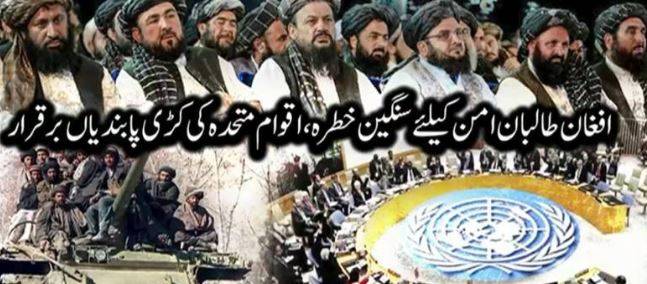
New York City / London (Web Desk): The United Nations Security Council (UNSC) has decided to maintain global sanctions on 22 senior leaders of the Afghan Taliban, in a significant move that underscores continued international pressure on the group.
Supporting this decision, the United Kingdom has also updated its national sanctions list, further tightening restrictions on Taliban officials and reinforcing coordinated global efforts to hold them accountable.
The sanctions target some of the most prominent figures in Afghanistan’s interim administration, including Mullah Mohammad Hassan Akhund, the acting Prime Minister, and Sirajuddin Haqqani, the acting Interior Minister.
These measures primarily aim to restrict their access to financial assets and limit their international travel.
According to a report published by the Afghan outlet Hasht-e Subh, the Human Rights Activists Alliance has welcomed the UNSC’s decision. The group stated that the continuation of sanctions reflects global recognition that the Taliban’s current governance policies remain a serious threat to international peace, regional stability, and fundamental human rights.
The British government, in addition to endorsing the UN decision, has revised its domestic sanctions framework to align with evolving international standards.
The updated list is designed to further isolate Taliban leaders by blocking their financial networks and restricting cross-border movements, thereby increasing pressure on them over alleged human rights violations.
This development comes at a time when the Taliban administration faces intense global criticism, particularly over restrictions on women’s education and employment in Afghanistan.
The continuation of these sanctions is expected to make it even more difficult for the Taliban government to gain formal international recognition.
Analysts suggest that the move signals a sustained and unified stance by the international community, indicating that any normalization of relations with the Taliban will remain conditional on significant policy changes, especially regarding human rights and inclusive governance.
Neo News | Copyright © 2026