Thu, September 17, 2026

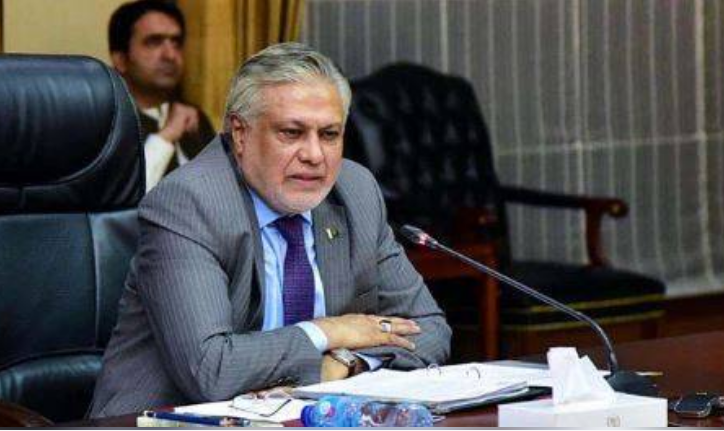
Doha (Web Desk): Deputy Prime Minister and Foreign Minister Ishaq Dar on Tuesday called for urgent reforms in the multilateral system, stressing that the UN Security Council (UNSC) must develop the ability to enforce its resolutions through real measures and interventions.
In an interview with Al Jazeera during his visit to Qatar for the foreign ministers’ preparatory meeting of the Emergency Arab Islamic Summit, where he was accompanying Prime Minister Shehbaz Sharif, Dar questioned the credibility of the UN system.
He said the Security Council was tasked with maintaining peace and security, but when its resolutions were ignored for decades in Palestine and Gaza and in Jammu and Kashmir, the body risked becoming ineffective.
DPM Dar noted that Qatar was involved in mediation when Israel launched its attack, a move he described as showing the reckless behavior of an aggressor that had repeatedly struck at Lebanon, Syria, Iran, and now Qatar.
He lamented that international law, humanitarian norms, OIC resolutions, and UN Security Council decisions seemed to have no impact on Israel, which continued to act unilaterally.
Dar pointed out that after the assault on Qatar, Pakistan—serving as a non-permanent elected member of the Security Council—worked with Somalia and Algeria to convene a special UNSC meeting, while also coordinating with OIC partners for the Arab Islamic Summit and engaging the UN Human Rights Council in Geneva.
He argued that Israel’s actions were aimed at undermining peace mediation efforts, exposing its unwillingness to seek a settlement.
FM Dar emphasized that dialogue and diplomacy remained the best approach to resolving complex disputes and noted that even non-Muslim countries were now voicing support for Palestinians suffering in Gaza.
He condemned the use of food as a weapon and highlighted that in the past two years, more than 60,000 people had been killed and 160,000 injured, including women and children.
The deputy premier urged an immediate and unconditional ceasefire along with unimpeded humanitarian aid.
DPM Dar reaffirmed Pakistan’s belief in the principle of equal dignity for all states, regardless of their size.
Referring to the conflict with India between May 7 and 10, he said that New Delhi’s narrative of being a regional hegemon or a security guarantor had been disproved when Pakistan exercised its right to self-defense.
He made clear that Pakistan, as a nuclear power, sought regional stability, warning that any destabilization would carry grave consequences.
DPM Dar slammed Israel of ignoring UN resolutions on Palestine and criticized India for its unilateral revocation of the special status of Occupied Jammu and Kashmir.
He suggested that measures such as strong economic sanctions could be used against countries that refuse to comply with Security Council resolutions.
The deputy prime minister appreciated the constructive role played by the United States during the Pakistan-India war.
He also rejected India’s suspension of the Indus Waters Treaty, saying any attempt to manipulate water would be unacceptable and reminding that Pakistan’s National Security Committee had already declared that such a step would be considered an act of war.
In response to a question about back-channel contacts with India, Dar said Pakistan was open to dialogue but only if it was comprehensive, covering terrorism, trade, economic issues, and the Kashmir dispute.
“We are not pleading for talks. As a peace-seeking nation, we welcome them, but India must also be willing—dialogue cannot be one-sided,” he remarked.
On terrorism, he said Pakistan possessed strong evidence of the involvement of foreign agencies in funding and facilitating militant activities, and that this material had already been shared with global bodies.
He stressed that the government and security institutions were fully committed to eliminating terrorism, drawing a firm line at the loss of civilian or military lives.
Dar added that Pakistan’s relationship with Afghanistan had improved considerably but repeated the demand that Kabul take decisive action against groups such as TTP, BLA, and Majeed Brigade.
Neo News | Copyright © 2026