Thu, September 17, 2026

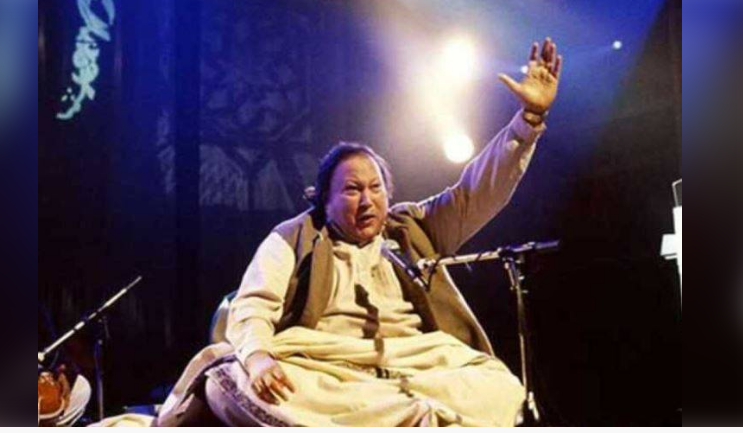
Lahore (Web Desk): On the solemn occasion marking twenty-eight years since the passing of Ustad Nusrat Fateh Ali Khan, the world once again bows in reverence to a maestro whose voice defied time, borders, and language.
Tributes poured in from across continents, as admirers, artists, and music lovers reflected on the enduring brilliance of a man whose melodies continue to resonate through generations.
Born on October 13, 1948, in the heart of Faisalabad, Pakistan, Nusrat Fateh Ali Khan’s journey was not just one of musical excellence but of spiritual transcendence.
Rising from a lineage steeped in the traditions of Qawwali, he reshaped the sacred form with a vision that embraced both heritage and innovation. It was his gift to intertwine the mystical depth of Eastern sounds with the contemporary pulse of Western music that set him apart—a pioneer of fusion, an alchemist of sonic experience.
His powerful vocals, both raw and refined, carried with them centuries of devotion, yet spoke to modern souls in a universal tongue. He became an emissary of Qawwali to the world, his voice stirring the hearts of audiences from Lahore to London, from Delhi to New York. With each performance, he bridged not only musical genres but cultural chasms, uniting people in the shared language of feeling.
Over the course of his illustrious career, Nusrat Fateh Ali Khan etched his name in the annals of music history, not merely through fame but through sheer, unmatched contribution. His name is enshrined in the Guinness Book of World Records, credited with recording an astonishing 125 albums, the most ever by a Qawwali artist. Each album stood as a testament to his spiritual commitment, vocal mastery, and profound emotional intelligence.
In 1987, the Government of Pakistan bestowed upon him the Pride of Performance Award, a recognition befitting a man who carried the musical soul of a nation and elevated it on the global stage.
His voice became a vessel for Pakistan’s cultural identity, a sound both ancient and ever-relevant.
The world, too, acknowledged the magnitude of his genius. Nusrat was honored with the prestigious UNESCO Music Prize, a rare accolade that recognized his unique role in preserving and promoting traditional music while fearlessly innovating within its framework. He was not merely a performer—he was a cultural envoy, spreading the light of South Asian devotional music far beyond its native soil.
Yet, on August 16, 1997, the world was silenced by grief as it lost one of its most luminous voices. Though he departed at the height of his glory, his legacy endures like an eternal raga, echoing through time. His songs, rich with longing, love, and the divine, continue to uplift and transform.
Ustad Nusrat Fateh Ali Khan was not just a singer; he was a vessel through which the sacred breathed. Decades after his passing, his music remains a sanctuary for the soul, a living reminder that true artistry knows no death
Neo News | Copyright © 2026