Thu, September 17, 2026

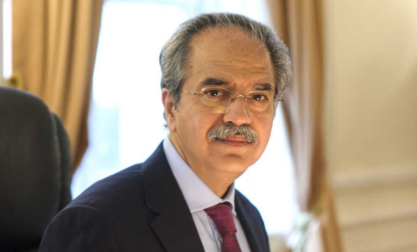
New York (Web Desk): Pakistan has urged the United Nations Security Council (UNSC) to take note of the worsening ground realities in the Democratic Republic of the Congo, warning that despite ongoing diplomatic momentum, eastern parts of the country remain gripped by violence, displacement and mounting humanitarian challenges.
Addressing the Council, Pakistan’s envoy to the UN, Asim Iftikhar Ahmad, said the situation on the ground continues to be unstable and deeply troubling.
He emphasized that implementing Resolution 2773 in full is critical, adding that a credible and lasting ceasefire is necessary to calm tensions and allow political dialogue to move forward.
Eastern DR Congo has long been a hotspot of conflict fueled by ethnic rivalries and armed militias, with the legacy of tragedies such as the Rwandan genocide still casting a shadow over the region.
In recent years, tensions escalated further after Kinshasa accused Rwanda in 2022 of backing the M23 rebel group inside its territory. Although a peace arrangement, commonly referred to as the Washington Accords, was reached in 2025 and later endorsed by the Council, hostilities have yet to fully subside.
The Pakistani envoy acknowledged ongoing diplomatic efforts aimed at easing tensions, including initiatives led by the African Union, alongside processes in Washington and Doha.
He said these parallel tracks, supported by international and regional actors, could collectively help rebuild trust and lay the groundwork for a broader settlement.
He also noted gradual progress in establishing systems to monitor and verify a ceasefire, expressing support for the role of the United Nations Organization Stabilization Mission in the Democratic Republic of the Congo in helping implement peace arrangements when circumstances permit.
Referring to the 2013 Peace, Security and Cooperation Framework signed in Addis Ababa, Ahmad described it as a vital mechanism for tackling the deeper causes of instability in the Great Lakes region, particularly through sustained dialogue and regional cooperation.
He further highlighted that the illegal extraction and trade of natural resources continue to fuel unrest in eastern DRC, stressing the need for stronger collaboration among regional countries, improved transparency in supply chains and effective enforcement to ensure these resources benefit citizens instead of driving conflict.
Reaffirming Islamabad’s position, he reiterated Pakistan’s firm support for the sovereignty, unity and territorial integrity of the DRC, along with its commitment to lasting peace in the region.
Separately, Sima Sami Bahous, head of UN Women, told the Council that sustainable peace cannot be achieved unless women are recognized as central contributors rather than victims of conflict.
She noted that while women in the region hold significant political representation, ongoing insecurity continues to limit their ability to lead effectively.
Sima called for stronger backing for women’s inclusion in peace processes and urged continued financial support for MONUSCO, which plays a key role in protecting women’s rights defenders and assisting vulnerable communities.
Meanwhile, Huang Xia, the UN Secretary-General’s Special Envoy for the Great Lakes region, outlined recent diplomatic developments, including renewed negotiations and ongoing mediation efforts aimed at reducing violence linked to armed groups such as M23.
Despite these initiatives, he warned that the conflict is becoming more complex, with the use of advanced weaponry, drone strikes and electronic interference. He pointed to rising displacement, worsening food shortages and increasing incidents of sexual violence, alongside growing hate speech and identity-based divisions that risk further destabilizing the region.
He emphasized that rebuilding trust among countries remains essential and called for full support to African Union-led mediation, including efforts facilitated by Togo.
Urging all parties, including the DRC and Rwanda, to return to meaningful dialogue, he cautioned that no peace effort can succeed without genuine political will from those directly involved.
Neo News | Copyright © 2026