Thu, September 17, 2026

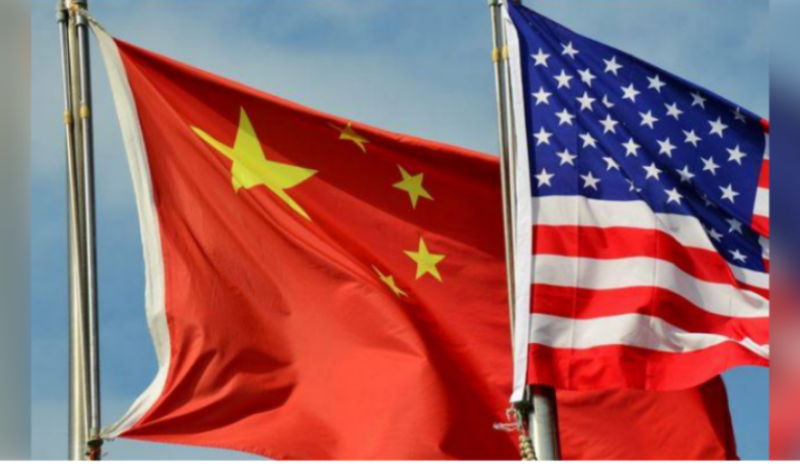
Beijing (Web Desk/Agencies): The United States (US) and China agreed to temporarily reduce tariffs on each other's goods for a 90-day period, marking a brief pause in a prolonged trade war that had caused significant disruptions in global markets and international supply chains.
The deal came after critical talks in Geneva over the weekend, which paved the way for the de-escalation of trade tensions.
In an interview aired on Fox News, President Donald Trump stated, "We have the confines of a very, very strong deal with China.
But the most exciting part of the deal...that's the opening up of China to US business.
" Trump went on to emphasize the opportunity this would bring for both countries, noting that the deal aimed to "open up China" to more US businesses.
He spoke optimistically while on Air Force One, en route to his Gulf tour, although he provided few specifics on how the process would unfold.
The trade war had a severe impact on international commerce, particularly affecting China, as the US imposed sweeping tariffs. China retaliated, and the tariff rates soared on both sides, often exceeding 100%.
After months of turmoil, a breakthrough in negotiations finally seemed to be on the horizon when high-level discussions were held in Geneva.
Under the terms of the new agreement, the US has decided to cut tariffs on Chinese goods to 30%, while China will lower its own tariffs to 10%. T
hese reductions, which were implemented just after midnight Washington time (0401 GMT) on Wednesday, represent a significant de-escalation from the previous levels, which had seen US tariffs on Chinese imports rise as high as 145% and even 245% on certain goods. As a result, global markets have responded positively to the news.
At the same time, Chinese officials have remained cautious about the deal's long-term implications, focusing on presenting themselves as a stable partner in global trade.
Speaking at a summit with Latin American leaders in Beijing, President Xi Jinping remarked, "There are no winners in tariff wars or trade wars," and he criticized a "major power" that seemed to believe "might makes right."
Despite the optimism surrounding the temporary suspension of tariffs, there are still unresolved issues that could lead to renewed tensions. One such issue is the US tariff on Chinese chemicals used in the production of fentanyl, which President Trump had raised as a concern in previous discussions.
Washington has long accused China of allowing the illegal trade of fentanyl to thrive, a claim that Beijing denies. Although there seems to be room for further negotiations, the dispute over this matter remains a significant obstacle.
Analysts are also cautious about the possibility of further tariff reductions.
"Further tariff reductions will be difficult and the risk of renewed escalation persists," said Yue Su, Principal Economist at The Economist Intelligence Unit, warning that the 90-day period may only temporarily alleviate the trade uncertainty.
Trump’s tariff dispute with China has already had a major impact on US companies that rely on Chinese manufacturing, and even with the temporary easing of tariffs, the economic uncertainty is far from over.
Moreover, China's economy, which was already grappling with a property crisis and sluggish consumer demand, continues to feel the effects of the trade war. Both nations, despite enduring substantial economic pain, appear willing to tolerate more strain, at least in the short term.
"Both sides have endured a good deal of economic pain and they can still endure a little bit more," noted Dylan Loh, an assistant professor at Nanyang Technological University in Singapore, underlining the ongoing pressures both economies face as they navigate this complex trade relationship.
Neo News | Copyright © 2026