Thu, September 17, 2026

Islamabad (Web Desk): The Supreme Court of Pakistan marked the nation’s 79th Independence Day on Friday with a dignified flag-hoisting ceremony that highlighted the values of equality, unity and religious harmony.

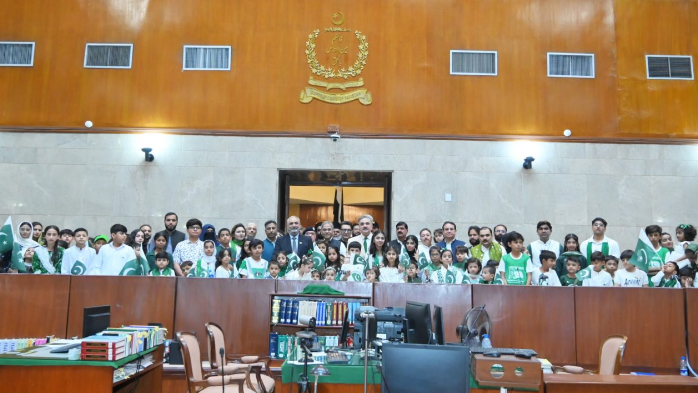
Chief Justice of Pakistan (CJP), Supreme Court judges, the Registrar, officers, staff and their children attended the ceremony at the Supreme Court building.
In a notable representation of Pakistan’s commitment to equal citizenship and inclusion, the national flag was raised by children belonging to the minority community alongside the CJP and judges of the Supreme Court, as well as a Hindu Pandit, Christian priest and Muslim cleric.
The Police Band performed the national anthem, creating a solemn and patriotic atmosphere as the participants joined in marking the national occasion.
The presence of representatives from different faiths conveyed a strong message of national unity, reaffirming that every citizen has an equal place in Pakistan.
The ceremony also reflected the principle that the country draws strength from its religious diversity, collective identity and adherence to constitutional values.
During the event, the CJP warmly interacted with participating children and guided them through Court Room No. 1.
He introduced them to the functioning and environment of the Supreme Court, turning the celebration into an informative and memorable experience for the young guests.
The Independence Day festivities continued with the customary cake-cutting ceremony, in which the CJP, Supreme Court judges and children participated, sharing the happiness and patriotic spirit associated with the occasion.
In his message marking Independence Day, the CJP conveyed his greetings to the people of Pakistan as well as members of the legal community.
He remembered the vision, sacrifices and unwavering resolve behind the creation of the country and paid tribute to those whose efforts paved the way for an independent Pakistan.
The CJP further noted that freedom comes with a continuing duty to safeguard constitutional principles, defend the rights of citizens and build greater public trust in state institutions.
Neo News | Copyright © 2026