Wed, September 16, 2026

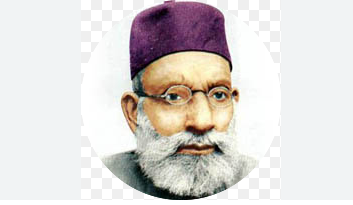
Lahore (Web Desk): The 75th death anniversary of renowned Urdu poet, journalist, politician, parliamentarian and freedom fighter Maulana Hasrat Mohani is being observed today.
Some people spend their lives fitting into one identity, but Hasrat Mohani was far more than a single role. He was a revolutionary who challenged oppression and at the same time a poet whose words carried deep emotion and softness. In him, literature and politics existed side by side, shaping a personality remembered for both courage and sensitivity.
Born on January 1, 1875, as Syed Fazal-ul-Hasan in Qasba Mohan of Unnao district in Uttar Pradesh, he later adopted “Hasrat” as his pen name and attached “Mohani” to represent his hometown. Over time, the name Hasrat Mohani became known for fearless political resistance as well as refined poetry.
He completed his education in Aligarh, where his sharp mind gradually turned towards political awareness and opposition to British rule. Even during his student life, he showed an independent spirit and refused to accept injustice quietly.
By 1903, the British authorities had already viewed him as a threat and sent him to prison. However, jail only strengthened his determination instead of breaking it.
After finishing his studies, Mohani launched the Urdu magazine Urdu-e-Mualla from Aligarh. Through this publication, he openly criticised colonial policies and spoke against injustice with remarkable boldness.
The British government considered the magazine dangerous, eventually banning it and imprisoning Mohani again in 1907. Yet every punishment only increased his belief in the power of words and ideas. He was jailed once more in 1925, but imprisonment never succeeded in silencing his spirit.
In 1921, Hasrat Mohani introduced the famous slogan “Inquilab Zindabad” — Long live the revolution.
The phrase later became one of the strongest symbols of resistance across the subcontinent.
Although Bhagat Singh later popularised it, the slogan originally came from Mohani’s belief that freedom was not something to be requested politely but a basic right that demanded struggle and sacrifice.
The slogan soon spread everywhere, from courtrooms and prisons to political gatherings and public protests. It united people across different languages and ideologies who shared a desire for justice and freedom. Even today, it remains one of the most recognised expressions of resistance and protest.
By creating those two powerful words, Hasrat Mohani gave a lasting voice to revolution.
At the same time, his literary contribution was equally remarkable. His famous ghazal “Chupke Chupke Raat Din Aansoon Bahana Yaad Hai” remains one of the most admired pieces of Urdu poetry.
The couplets speak quietly about hidden sorrow, memories of love and silent pain. Unlike his political slogans, the ghazal carries no anger or rebellion on the surface, only the gentle sadness of longing and remembrance.
Still, the emotional honesty within the poetry reflected another kind of strength.
Mohani expanded the emotional beauty of the ghazal by expressing loneliness, memories and vulnerability with simplicity and grace.
Years later, when renowned singer Ghulam Ali performed it, the ghazal reached audiences around the world and became deeply connected with feelings of heartbreak and nostalgia.
The fact that the same person could create both “Inquilab Zindabad” and such tender poetry shows the depth of Hasrat Mohani’s personality.
For him, love and freedom were not separate ideas but equally important parts of life. In his collection Kuliyat-e-Hasrat, themes of romance, society, politics and liberty blend naturally together, reflecting his belief that personal emotions and social struggles are closely connected.
Mohani lived a simple life, faced repeated imprisonment and sacrificed comfort for the sake of his principles.
Despite his hardships, he never lost his emotional depth or compassion. His poetry carried courage, while his politics carried humanity.
Hai mashq-e-suḳhan jaari chakki ki mashaqqat bhi
Ik turfa tamasha hai 'Hasrat' ki tabiat bhi
This is one of famous couplets of Hasrat that reflects the extraordinary strength of his character during imprisonment. It describes a striking contrast in his life: on one side, he is bound by the harsh routine of jail, where he is compelled to perform exhausting manual work like grinding grain; on the other, he continues to engage in the refined and intellectual pursuit of poetry.
Despite the physical hardship and confinement, his creative spirit remains active and unbroken.
Hasrat Mohani passed away on May 13, 1951, in Lucknow.
He did not leave behind wealth or political power, but he gave the world something far more lasting — a revolutionary slogan that still inspires people and poetry that continues to touch hearts. His life remains proof that strength and tenderness can exist together in the same person.
Neo News | Copyright © 2026