Thu, September 17, 2026

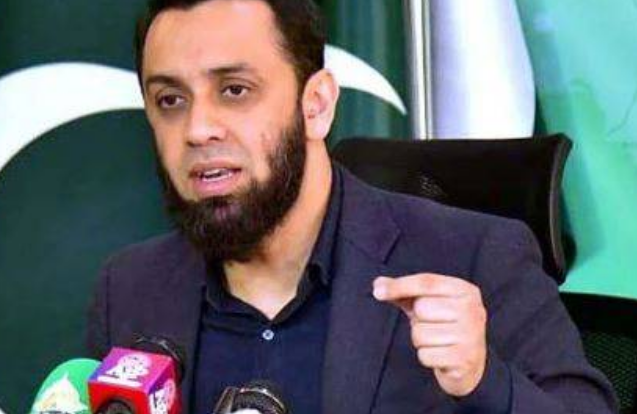
Islamabad (Web Desk (Web Desk): Federal Minister for Information and Broadcasting Attaullah Tarar on Wednesday said that Pakistan successfully countered India’s false narrative during Marka-e-Haq and the May conflict through national unity, coordinated state action, responsible media coverage, and rapid dissemination of verified information at the international level.
Addressing a seminar titled “Marka-e-Haq: Victory in the Battlefield & Beyond” at the Institute of Strategic Studies Islamabad (ISSI), he said Pakistan has always sought peace and that the war was imposed on it despite its frontline role in the global fight against terrorism.
He added that Pakistan acts as a barrier between extremist networks and the world, while accusing India of projecting internal issues outward. He also said Jammu and Kashmir remains an internationally recognized dispute backed by UN Security Council resolutions on self-determination.
Referring to the Pahalgam incident, Tarar termed it a staged event aimed at blaming Pakistan, pointing out that an FIR was registered within minutes without investigation. He questioned India’s claims of cross-border involvement, noting the distance of over 100 kilometers from the Line of Control and lack of detected movement.
He said Pakistan’s narrative gained strength due to unified efforts of state institutions, and highlighted that Prime Minister Shehbaz Sharif offered an independent inquiry into the incident at PMA Kakul, which India did not accept.
The minister said Pakistan had acted as a shield between terrorists and the rest of the world, adding that India’s narrative suffered from internalizing its external issues and externalizing its internal issues.
Tarar said Pakistan acted within the UN Charter while responding firmly, and engaged international media to highlight its sacrifices in the war on terror, including over 90,000 lives lost and massive economic losses. He questioned how a country fighting terrorism could be accused of promoting it.
He also referred to alleged Indian-linked activities abroad, including the killing of Hardeep Singh Nijjar in Canada and other assassination plots, while citing the arrest of Kulbhushan Yadav in Pakistan as evidence of destabilizing actions.
Criticizing Indian media for “war hysteria,” he said Pakistan’s media, academia, and youth played a positive role, including Gen Z’s creative digital “meme warfare,” which strengthened Pakistan’s global narrative.
He praised Field Marshal Asim Munir for leadership during the conflict, saying Pakistan targeted military sites while India struck civilians. He claimed Pakistan Air Force downed Indian Rafale jets, exposing India’s overconfidence, while the Navy remained fully alert.
Calling Marka-e-Haq a national success, he said Pakistan’s unified stance strengthened its global image despite India’s lobbying efforts, which he claimed led to isolation due to propaganda-based narratives. He added that Pakistan’s truth-based approach enhanced its international standing.
The seminar was attended by Chairman Board of Governors ISSI Ambassador (R) Khalid Mahmood, former foreign minister Ambassador Jalil Abbas Jilani, Foreign Office spokesperson Tahir Hussain Andrabi, former Vice Chief of Air Staff Air Marshal (R) Farooq Habib, and several strategic analysts including Ahmad Hasan Al Arbi and Khurram Abbas, among other distinguished participants.
Neo News | Copyright © 2026