Thu, September 17, 2026

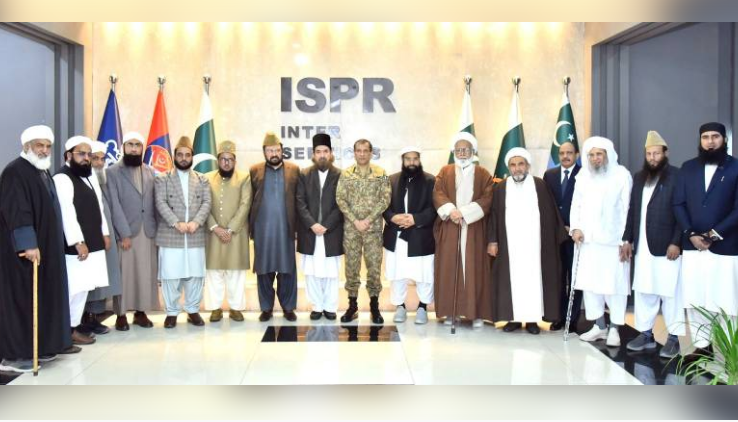
Rawalpindi (Web Desk): Ulema and Mashaikh have expressed unwavering solidarity with the Pakistan Armed Forces and reaffirmed their collective resolve to counter anti-state narratives and hostile propaganda.
This commitment was expressed by a high-level delegation from the National Paigham-i-Aman Committee (NPAC), led by its Chairman Hafiz Tahir Mahmood Ashrafi during a meeting with the Director-General of Inter-Services Public Relations (DG ISPR) at the General Headquarters (GHQ) in Rawalpindi.
During the meeting, the NPAC reaffirmed its unwavering solidarity with the Pakistan Armed Forces and pledged full support in advancing the national narrative.
The delegation also strongly condemned extremist groups, including Fitna-ul-Khawarij, the Tehreek-e-Taliban Pakistan (TTP), and the Afghan Taliban, emphasizing that terrorism cannot be justified under any circumstances.
Speaking on the occasion, DG ISPR stressed the critical importance of unity and a consistent message in matters of national security.
He described the comprehensive dialogue on internal security in the context of Fitna-ul-Khawarij, TTP, and TTA as a positive development, noting that the meeting further strengthened the shared stance on these issues.
The meeting also reaffirmed Pakistan’s principled position on Kashmir and Gaza.
DG ISPR emphasized that supporting oppressed nations is a moral responsibility of Pakistan, and this stance remains non-negotiable.
NPAC declared its commitment to promoting messages of unity, social harmony, and constitutional equality nationwide, both from religious platforms and community spaces.
The parties also agreed on adopting a zero-tolerance policy against hate speech, sectarianism, and extremist ideologies.
DG ISPR highlighted that public awareness and a truth-based narrative are decisive tools to counter the psychological warfare waged by adversaries.
NPAC proposed increasing awareness and guidance sessions in mosques, religious schools, and universities to further disseminate the state’s narrative.
Describing the meeting as exceptionally productive, DG ISPR expressed hope that it would pave the way for renewed confidence and practical cooperation between the institutions.
Neo News | Copyright © 2026