Thu, September 17, 2026

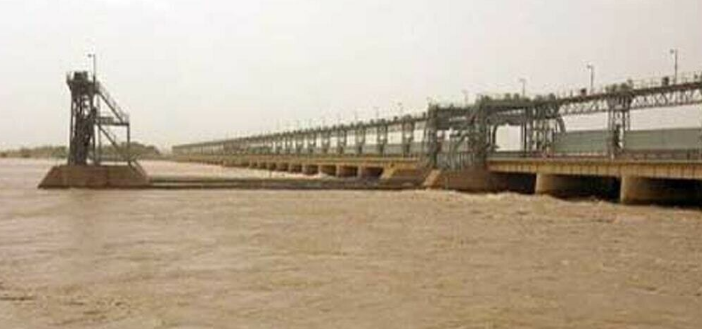
Lahore/ Multan (Web Desk): The Flood Forecasting Division (FFD) has reported that Panjnad, the meeting point of the Ravi, Chenab, Jhelum and Sutlej rivers before they merge into the Indus, is facing an exceptionally high flood.
Data indicates that at 5pm, 658,845 cusecs of water were passing through Panjnad, making their way downstream towards Sindh, where 475,970 cusecs are flowing at the Guddu Barrage.
Meanwhile, National Disaster Management Authority (NDMA) Chairman Lt Gen Inam Haider Malik, in a briefing, confirmed that about 2.4 million people have been shifted from different parts of Punjab to secure locations.
He said rehabilitation of more than 5,000 damaged villages and agricultural fields will commence once water levels fall.
The PDMA chairman explained that the process will take around four to five weeks, after which infrastructure, communication networks and roads will be restored to enable full-scale recovery.
He also acknowledged the important role played by provincial authorities, relief organizations, military units and volunteers during emergency operations.
The flood surge that earlier struck Punjab has now entered the Indus River, resulting in a rapid rise in water levels at the Guddu and Sukkur Barrages.
Officials from the irrigation department reported that inflows at these points have surged by thousands of cusecs within a day.
Updated statistics show 502,861 cusecs entering Guddu Barrage with 407,970 cusecs released, while Sukkur Barrage recorded 440,985 cusecs inflow and 412,735 cusecs outflow.
At Kotri Barrage, the inflow has reached 257,754 cusecs, with an outflow of 254,354 cusecs.
As the Indus continues to swell, floodwaters have submerged vast tracts of riverine land, sweeping into numerous villages.
Emergency teams and local administrations are actively engaged in evacuating affected populations.
Authorities have urged people in vulnerable areas to move to safer ground and adopt precautionary measures as close monitoring of the evolving situation continues with efforts focused on reducing the scale of damage.
Neo News | Copyright © 2026