Thu, September 17, 2026

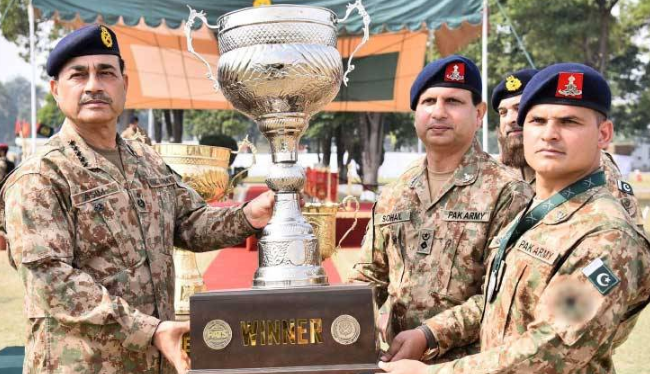
Rawalpindi (Web Desk): The 9th International Pakistan Army Team Spirit (PATS) Competition successfully concluded at Kharian, the military’s media wing said on Tuesday.
According to the Inter-Services Public Relations (ISPR), the Team Spirit Competition is a 60-hour long patrolling exercise, designed to enhance professional military skills through the exchange of innovative ideas, tactical experiences and best practices among participating teams.
This year the competition featured wide ranging participation from 19 countries including Bahrain, Bangladesh, Belarus, Egypt, Iraq, Jordan, Kingdom of Saudi Arabia, Malaysia, Maldives, Morocco, Nepal, Qatar, Sri Lanka, Turkiye, United States of America and Uzbekistan and Indonesia.
Myanmar and Thailand attended the exercise as observers. Sixteen domestic teams from the Pakistan Army and Pakistan Navy, along with observers from the Pakistan Air Force also participated in the event.
Addressing the closing ceremony, Chief of Army Staff (COAS) and Chief of Defense Forces (CDF) Field Marshal Syed Asim Munir commended all participating teams for their exceptional professionalism, physical and mental endurance, operational competence and high morale displayed during the exercise.
He emphasized the importance of such multinational engagements in enhancing collective preparedness and adapting to the evolving character of modern warfare.
Reaffirming the core values of the Pakistan Army, the CDF underscored the enduring soldiery attributes of “character, courage and competence”, which have been consistently demonstrated by Pakistani soldiers, particularly in the ongoing fight against terrorism.
Field Marshal Syed Asim Munir presented awards to the outstanding participants of the competition.
The COAS also witnessed miscellaneous training activities at National Counter Terrorism Centre (NCTC) Pabbi including a visit to newly established Tactical Simulator.
Field Marshal Asim Munir lauded the efforts of troops and technical team and emphasized the importance of simulator-based training to complement traditional training methods.
Neo News | Copyright © 2026