Thu, September 17, 2026

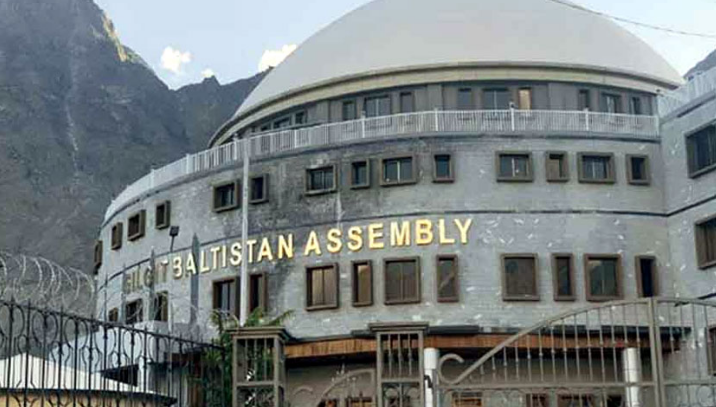
Skardu/Gilgit (Web Desk): Preliminary and unofficial results from the Gilgit-Baltistan Legislative Assembly elections indicate that the Pakistan Peoples Party (PPP) has taken an early lead, winning 9 of the 24 contested seats.
The Pakistan Muslim League-Nawaz (PML-N) secured six seats, placing it second in the overall tally.
Independent candidates performed strongly as well, claiming victory in seven constituencies, including two contenders supported by Pakistan Tehreek-e-Insaf (PTI). Majlis Wahdat-e-Muslimeen (MWM) managed to secure one seat, according to the initial results.
According to the latest available figures, the Pakistan Peoples Party (PPP) and independent candidates have emerged as major contenders, securing victories in multiple constituencies, while vote counting remains underway in several others.
Based on complete results received from all polling stations in a number of constituencies, Pakistan Peoples Party (PPP) candidate Imran Nadeem won a decisive victory in GBA-12 Shigar with 12,944 votes. His closest rival, Raja Muhammad Azam Khan of Tehreek-e-Islami Pakistan (TIP), secured 8,682 votes.
In GBA-23 Ghanche-II, independent candidate Anwar Ali claimed a convincing win after obtaining 12,117 votes, while fellow independent candidate Abdul Hameed managed 4,119 votes.
The contest in GBA-8 Skardu-II was won by Muhammad Kazim of Majlis Wahdat-e-Muslimeen (MJWM), who received 10,474 votes. PPP candidate Syed Muhammad Ali Shah finished second with 10,118 votes.
In GBA-22 Ghanche-I, Pakistan Muslim League-Nawaz (PML-N) candidate Muhammad Ibrahim Sanai emerged victorious with 9,308 votes, while PPP’s Ashiq Hussain came in second with 8,052 votes.
Independent candidate Asad Shafiq secured victory in GBA-24 Ghanche-III after polling 8,092 votes. PPP candidate Muhammad Ismail received 5,072 votes.
PPP’s Nasir Ali Khan won the GBA-10 Skardu-IV seat with 6,582 votes, defeating Istehkam-e-Pakistan Party candidate Wazir Muhammad Khan, who garnered 4,667 votes.
In GBA-9 Skardu-III, PPP candidate Fida Muhammad Nashad was declared successful after securing 6,314 votes. Independent candidate Wazir Muhammad Saleem remained close behind with 6,106 votes.
PPP also registered another victory in GBA-7, where Syed Tauqeer Mehdi won the seat with 4,337 votes, while Raja Jalal Hussain Khan of the Istehkam-e-Pakistan Party received 3,891 votes.
Meanwhile, in Astore’s GBA-13 constituency, results from 36 polling stations showed PML-N candidate Rana Farman Ali maintaining a narrow lead with 4,368 votes. Independent candidate Shahida remained in close contention with 4,312 votes. In GBA-14, PML-N’s Rana Muhammad Farooq was also leading over Istehkam-e-Pakistan Party candidate Shams-ul-Haq Lone.
In Ghizer district, independent candidate Aman Ali was ahead in GBA-21 with 5,169 votes. PML-N’s Zafar Muhammad held the leading position in GBA-19, while independent candidate Safdar Ali Shirazi was in front in GBA-20.
Vote counting continued across several constituencies in Diamer, where independent candidate Muhammad Dilpazeer was leading in GBA-15. In GBA-16, Istehkam-e-Pakistan Party’s Atiq Ullah held an advantage, while PPP candidate Muhammad Naseem was ahead in GBA-17. PML-N’s Kifayat-ur-Rehman was leading the race in GBA-18.
In Kharmang, preliminary results from 11 polling stations in GBA-11 indicated that PPP candidate Iqbal Hassan was in the lead with 1,607 votes as counting continued.
Polling for the 24 seats had concluded peacefully on Sunday evening amid tight security arrangements.
However, as the polling process ended and vote counting started, PPP Secretary General Nayyar Hussain Bukhari alleged that the party was facing delay in provision of Form-45, the official document prepared by the presiding officer at each polling station detailing the vote count after polling.
He stated that the issue was brought to the attention of the Chief Election Commissioner, whom they have formally contacted regarding the matter.
Official figures released by the Election Commission of Gilgit-Baltistan show that the region’s 10 districts have a combined electorate of 963,034 voters. Of these, 566,097 are men while 396,937 are women.
A total of 403 candidates, including 8 women were competing for the 24 general seats in the Gilgit-Baltistan Assembly.
The Gilgit-Baltistan Assembly comprises 33 seats in total, with 24 members elected through direct voting, six seats reserved for women and three designated for technocrats.
The Election Commission had set up a total of 1,391 polling stations across all districts of Gilgit-Baltistan.
Out of these, 488 were marked as normal, 349 as sensitive, and 551 as highly sensitive, indicating heightened security categorisation in several areas.
The Pakistan Peoples Party (PPP) fielded 23 candidates, making it the largest group in the contest. It was followed by the Pakistan Muslim League-Nawaz (PML-N) with 22 candidates. Independents backed by the Pakistan Tehreek-e-Insaf (PTI) numbered 19.
Other participants included the Istehkam-e-Pakistan Party (IPP) with 15 candidates, the Pakistan Nazriyati Party with 11, the Jamiat Ulema-e-Islam-Fazl (JUI-F) and Islami Tehreek Pakistan (ITP) each with nine nominees, the Majlis Wahdat-e-Muslimeen (MWM) with seven candidates, and both the Jamaat-e-Islami (JI) and Muttahida Qaumi Movement-Pakistan (MQM-P) with six candidates each. The Awami Workers Party (AWP) also participated by fielding four candidates.
Strict security arrangements were in place across Gilgit-Baltistan, with personnel from local police, the Gilgit-Baltistan Scouts, and additional contingents from Punjab and Sindh police deployed at polling stations and key locations.
Additional security personnel were deployed at sensitive and highly sensitive sites, while law enforcement agencies remained on high alert throughout the polling period.
Speaking to newsmen Inspector General of Gilgit-Baltistan Police Nasir Akbar Khan confirmed that more than 17,500 security personnel were assigned duties for the election day.
He added that police, Rangers, and other agencies stayed vigilant and ensured enhanced security presence, particularly in vulnerable polling areas.
Neo News | Copyright © 2026