Thu, September 17, 2026

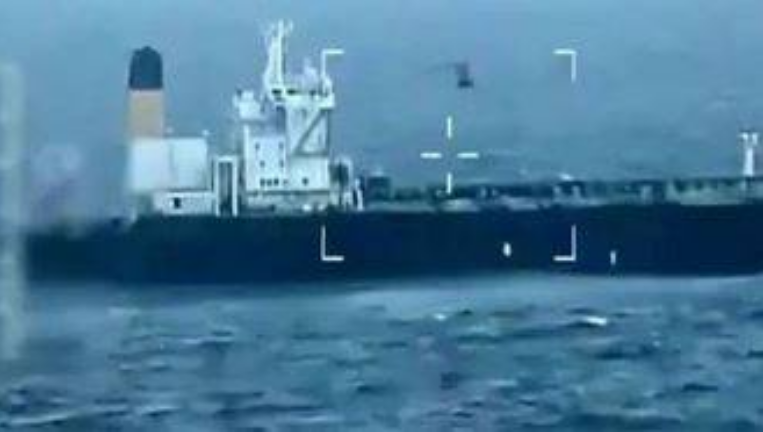
Washington (Web Desk): The United States (US) on Wednesday seize two oil tankers tied to Venezuela in the Atlantic Ocean, one of them sailing under a Russian flag, as President Donald Trump intensified a hard-line campaign to control energy movements in the region and pressure Venezuela’s socialist leadership into aligning with Washington.
The action came days after US forces carried out a military operation in Caracas on Saturday that resulted in the arrest of Venezuelan President Nicolás Maduro. Since then, the Trump administration has expanded its enforcement of sanctions, targeting vessels travelling to and from Venezuela, an OPEC member.
At the same time, the White House announced plans to loosen some of the oil sanctions imposed during Trump’s first term in 2019.
US officials said a pursuit that had stretched across the Atlantic for weeks ended early Wednesday when the Coast Guard, backed by US special forces and acting under a court-issued seizure warrant, took control of the crude oil tanker Marinera.
The ship had earlier refused inspection last month before switching its registration to Russia.
The operation carried the risk of escalating tensions with Moscow, as Russian naval assets, including a submarine, were operating nearby.
Russia has criticised US actions against Venezuela and remains locked in confrontation with Western nations over the war in Ukraine. The Kremlin did not comment, citing a public holiday.
Vice President JD Vance rejected the idea that the tanker was genuinely Russian. In an interview on Fox News, he said the vessel had falsely presented itself as Russian in an attempt to bypass US sanctions.
Earlier on Wednesday, the Coast Guard also intercepted another tanker, the Panama-flagged M Sophia, near the northeastern coast of South America. US officials said the ship was fully loaded with Venezuelan crude, according to records from state oil firm PDVSA. This marked the fourth tanker seized in recent weeks.
Although the Marinera — previously known as Bella-1 — was not carrying oil, US authorities said both ships were part of a clandestine fleet used to transport oil from Venezuela and Iran in defiance of sanctions.
White House Deputy Chief of Staff Stephen Miller said only energy shipments that comply with U.S. law and national security requirements would be permitted. He added that Venezuela’s energy sector could see major economic gains through lawful and US-approved commercial routes.
Attorney General Pam Bondi said the Marinera’s crew made repeated attempts to avoid capture and ignored Coast Guard orders, actions that could lead to criminal charges.
The Trump administration is also pushing for an agreement with Caracas to reroute oil shipments originally destined for China — Venezuela’s largest buyer — while securing access to about $2 billion worth of crude.
China criticised the US move, with Foreign Ministry spokesperson Mao Ning accusing Washington of using force and intimidation. She said the demand that Venezuela prioritise “America First” in managing its oil resources amounted to blatant bullying.
Trump has openly discussed exerting US influence over Venezuela’s vast oil reserves in cooperation with American energy companies following Maduro’s arrest and detention. He has repeatedly portrayed the Venezuelan leader as a drug trafficker aligned with Washington’s adversaries
Venezuela’s Interior Minister Diosdado Cabello said late Wednesday that 100 people were killed during the US military assault.
Trump said on social media that revenue from any oil agreement with the United States would be used by Venezuela to purchase American products, including agricultural goods and medicines.
Maduro, 63, pleaded not guilty this week to drug-related charges when he appeared in shackles before a federal court in New York.
Despite Maduro’s detention, his Socialist Party allies remain in control in Caracas. Acting President Delcy Rodríguez has taken a cautious approach, condemning what she described as Maduro’s “abduction” while also exploring cooperation with Washington under explicit threats of further military action from Trump.
Senior administration officials, including Secretary of State Marco Rubio and Defence Secretary Pete Hegseth, briefed members of the US Senate and House of Representatives behind closed doors on Wednesday. Democratic lawmakers said they were seeking additional clarity.
Democratic Senator Chris Murphy of Connecticut accused the administration of attempting to seize Venezuela’s oil by force and use it indefinitely as leverage to control the country.
In a separate Fox News appearance on “Jesse Watters Primetime,” Vance suggested the United States would effectively govern Venezuela through control of its energy resources, allowing oil sales only when they align with U.S. interests.
Trump said on Tuesday that the United States would refine and sell up to 50 million barrels of Venezuelan crude trapped by sanctions, calling it the first step in reviving an industry that has long struggled despite holding the world’s largest oil reserves.
White House Press Secretary Karoline Leavitt said the plan would be made possible by a selective easing of sanctions on Venezuelan oil.
Rodríguez later said Venezuela is open to an energy agreement with the United States that benefits all sides. Addressing leaders of the National Assembly, she said the country is willing to pursue cooperative energy relations.
PDVSA confirmed negotiations with Washington are underway, saying discussions are focused on commercial arrangements that are legal, transparent and mutually beneficial.
However, the Financial Times reported that US oil companies remain hesitant about investing in Venezuela due to uncertainty over Trump’s foreign policy and are expected to seek firm guarantees at a White House meeting on Friday.
Global oil prices slipped following news of Trump’s plan, as markets anticipated an increase in supply.
China, Russia and left-leaning governments allied with Venezuela have condemned the US operation that led to Maduro’s capture, during which dozens of Venezuelans were reportedly killed.
Even close US allies have expressed concern over the unprecedented arrest of a sitting foreign head of state, particularly as Trump has warned of further actions — from Mexico to Greenland — to advance American interests.
Neo News | Copyright © 2026