Thu, September 17, 2026

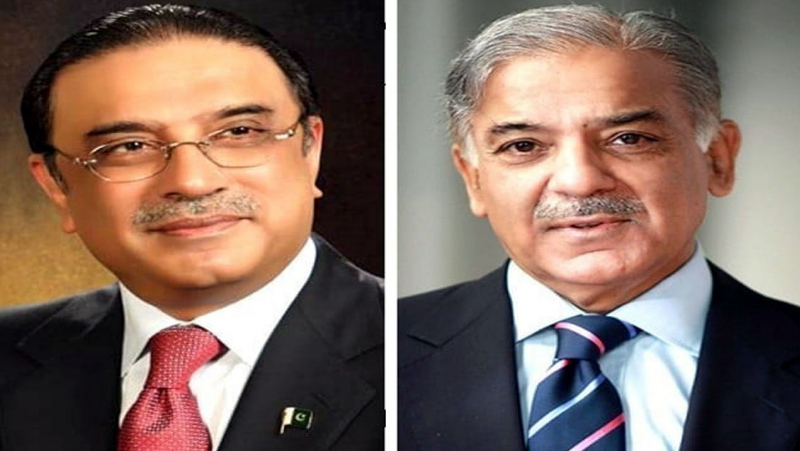
Islamabad (Web Desk): President Asif Ali Zardari and Prime Minister Shehbaz Sharif have expressed Pakistan's firm commitment to the principles and objectives of South Asian Association Regional Cooperation (SAARC).
In their messages on 40th anniversary of SAARC Charter Day, the president and the premier conveyed that Pakistan considers SAARC an important avenue for advancing regional stability, mutual progress and constructive engagement among South Asian countries, and affirmed that the country will keep supporting initiatives that strengthen cooperation across the region.
President Asif Ali Zardari said that Pakistan is ready to partner with any South Asian country willing to boost regional trade, transit routes, energy cooperation and direct exchanges among people—efforts he said would uplift the entire region.
In a message marking the 40th anniversary of SAARC Charter Day on December 8, 2025, the president extended greetings to all governments and citizens of South Asia.
He recalled that when SAARC was formed in Dhaka in December 1985, it was built on a simple but powerful assumption: that the region’s future would be safer and more prosperous if its nations chose cooperation.
President Zardari noted that Pakistan has consistently supported this idea, hosting the 4th SAARC Summit during the first government of Shaheed Mohtarma Benazir Bhutto, followed by the 12th Summit years later.
He highlighted that Pakistan was scheduled to host the 19th SAARC Summit in Islamabad in 2016, but the process came to a halt after India refused to participate.
The president said that India’s disputes with almost all its neighbouring states have turned its stance into the main roadblock to genuine regional cooperation, keeping South Asia’s peace and development restricted by its limited policy choices.
Zardari said that the prolonged deadlock has pushed several member states to question whether the region can afford further stagnation.
He noted that there is a rising inclination among countries to explore a renewed cooperation platform—one that remains open to every state but prevents a single country from stopping collective progress.
President Zardari added that important regional actors such as Iran and China could also be included in this revival plan, which would widen connectivity, strengthen economic ties and enhance stability across the broader region.
Reaffirming Pakistan’s commitment, the President said the country supports a cooperative, inclusive and future-oriented regional environment.
He emphasised that Pakistan’s geographical location—linking South Asia with Central Asia and the Middle East—naturally places it in a position to help advance trade, transit and energy partnerships with any state willing to work together for shared regional benefits.
“On this Charter Day, I encourage South Asian nations to approach the future with clarity and sincerity. The region’s challenges are shared and so must be the solutions. With a spirit of respect and practical cooperation, we can shape a more peaceful and prosperous South Asia for our future generations,” President Zardari said.
Prime Minister Shehbaz Sharif has reiterated Pakistan’s strong adherence to the spirit of the SAARC Charter, saying the country firmly believes that regional progress depends on cooperation shaped by equality, respect and meaningful engagement among South Asian states.
Marking the 40th SAARC Charter Day on December 8, 2025, he extended warm wishes to all member nations, noting that the occasion serves as a reminder of the region’s collective hopes and ambitions.
“As we commemorate, the 40th anniversary of the SAARC Charter Day, I extend my warmest greetings to the peoples and the governments of all SAARC member-states. This auspicious occasion, reminds us of our shared aspirations for peace, progress and prosperity across the region of South Asia.”
The prime minister said the organization was founded more than forty years ago with the aim of nurturing dialogue and strengthening unity among neighbouring countries. “When SAARC was established, over four decades ago, it was meant to provide an essential platform, to promote dialogue, foster cooperation and strengthen the bonds that bring our nations together,” he noted.
He regretted that political issues within the region have prevented SAARC from fully achieving its goals, but appreciated the Secretariat’s continued dedication.
“While these goals have, regrettably, remained elusive due to political considerations, within the region, I commend the SAARC Secretariat for striving hard to provide its dedicated assistance as well as for its efforts to advance the organization’s goals and creating opportunities for meaningful collaboration among the member states.”
Emphasizing the growing importance of regional linkages, he said stronger economic, digital and human connections were essential for South Asia’s future. “In an era of growing regional cooperation, the necessity of economic, digital, and people-to-people connectivity in South Asia could hardly be overemphasized. Together, we must work to enhance linkages that facilitate trade, investment, innovation, and cultural exchange in our region,” he added.
The Prime Minister said the region faces shared threats that no country can tackle alone, including poverty, climate-related disasters, food and energy pressures, and public health risks.
“Our region also faces common challenges such as poverty, climate induced natural disasters, food and energy insecurity and public health issues.
These challenges transcend borders and require collective responses based on mutual trust, goodwill, and a spirit of mutual cooperation. It is only by acting together, that we can build a resilient and inclusive future, for our peoples.”
He called on all member states to renew their resolve for a stable and united South Asia.
“Let us reaffirm today, our commitment to building a peaceful, stable and prosperous South Asia, that is defined by collaboration, connectivity, and a shared vision for the collective well-being of its peoples.”
Neo News | Copyright © 2026