Thu, September 17, 2026

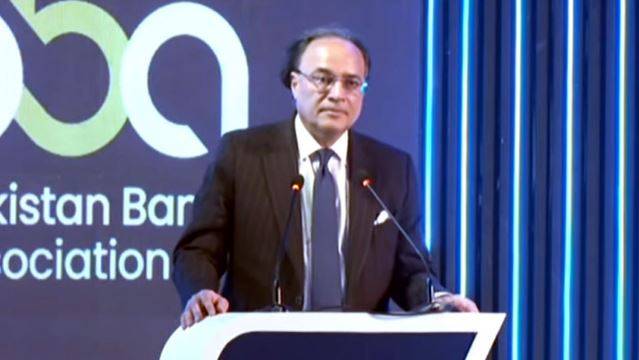
Karachi (Web Desk) Federal Minister for Finance and Revenue Senator Muhammad Aurangzeb on Tuesday said Pakistan’s external account continued to perform strongly, supported by unprecedented inflows of overseas workers’ remittances, which are expected to total between $41 billion and $42 billion by the end of the current fiscal year.
Addressing participants at the second edition of the Pakistan Banking Summit 2026 in Islamabad, the finance minister said the country had wrapped up the last fiscal year with encouraging results across major economic indicators.
He pointed to the achievement of a primary budget surplus, the lowest fiscal deficit on record, a debt-to-GDP ratio that remained comfortably below 70 percent, and overall economic growth of 3.7 percent, driven largely by a robust recovery in large-scale manufacturing.
Commenting on exports, Aurangzeb acknowledged that overall export figures had softened, but stressed that the decline was mainly linked to food-related products.
He noted that value-added exports, particularly from the textile industry, continued to post year-on-year gains, reflecting sustained strength in the sector.
The minister also expressed confidence that Pakistan’s foreign exchange reserves would reach around $18.4 billion by the close of the fiscal year, exceeding earlier official projections.
Discussing the government’s financing strategy, Aurangzeb said Pakistan had re-engaged international debt markets through a Eurobond, while the planned issuance of a Panda Bond represented a particularly significant milestone.
He observed that the country had overlooked China’s vast capital market for the past seven to eight years, despite it being the world’s second-largest and second-deepest financial market.
Speaking about developments at the Pakistan Stock Exchange (PSX), he said the real success should be measured by the underlying drivers rather than market index levels.
According to the minister, the growing investor base—especially the increasing participation of Generation Z—and the return of corporate earnings to double-digit growth were strong indicators of economic confidence.
Referring to the current federal budget, Aurangzeb said it was the first budget to be prepared under the leadership of the newly established Tax Policy Office after its transfer to the Finance Division.
He said the government had centred its strategy on export-led economic expansion by abolishing advance tax and super tax, providing subsidised low-cost financing, and maintaining tariff reforms to improve business competitiveness.
He credited Prime Minister Shehbaz Sharif and the federal cabinet for supporting these policy initiatives and announced that the government would soon unveil a medium-term tax strategy aimed at ensuring greater fiscal stability.
The finance minister further said Parliament had approved a new tax administration operating model that would fundamentally transform the interaction between taxpayers and tax authorities.
Under the AI-powered and technology-driven system, human involvement would be kept to a minimum, with automated notices and digital processes improving efficiency and transparency.
Aurangzeb emphasised that easier access to financing would remain essential as Pakistan moves from economic stabilisation towards long-term, sustainable growth.
He urged the banking sector to expand lending to small and medium-sized enterprises, exporters, agriculture, manufacturing, construction, and the information technology sector, describing these areas as crucial to the country’s future development.
While expressing satisfaction with the direction of economic reforms, he acknowledged that much more work remained to be done before Pakistan could achieve its long-term growth objectives.
On the privatisation programme, the minister said Pakistan International Airlines (PIA) had now been successfully transferred to private ownership.
He added that roadshows for the privatisation of three electricity distribution companies had been completed, while another 28 state-owned organisations had been placed under the Privatisation Commission for the next phase of the process.
Concluding his remarks, Aurangzeb commended the Pakistan Banks Association (PBA) for organising the summit and invited participants to share their recommendations for further strengthening the country’s banking sector and broader economic reform agenda.
Neo News | Copyright © 2026