Thu, September 17, 2026

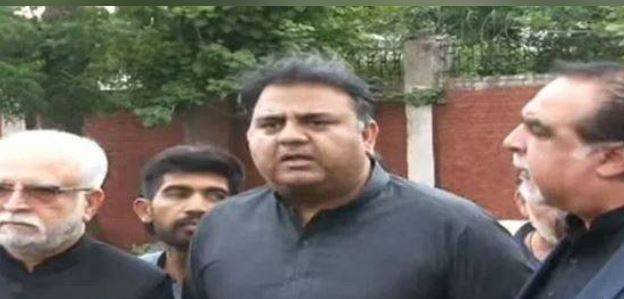
A countrywide consultative conference organised by the National Dialogue Committee (NDC) has appealed to Pakistan’s senior leadership to personally step in and open an organised political dialogue with the opposition to reduce tensions and help restore democratic and economic stability.
The appeal was made at a representative national meeting held in Islamabad on Wednesday, which brought together leaders from major political parties along with intellectuals, journalists, lawyers and other figures connected to the country’s political and democratic framework.
The NDC was recently established by former Pakistan Tehreek-e-Insaf (PTI) leaders, including Fawad Chaudhry, former Sindh governor Imran Ismail and Mahmood Moulvi.
Unlike earlier initiatives that largely focused on PTI founder Imran Khan’s detention at Adiala Jail, the committee’s current priority has shifted to Kot Lakhpat Jail, where a number of senior PTI figures — including Shah Mahmood Qureshi, Mian Mahmoodur Rashid, Ejaz Chaudhry, Umar Cheema and Dr Yasmin Rashid — remain incarcerated.
In a joint statement issued after the conference, the committee expressed deep concern over persistent political instability, economic pressures on the public, restrictions on political engagement and the media, and the continuing threat of terrorism.
The participants underscored the urgency of national cohesion, political reconciliation and confidence-building steps, while acknowledging the NDC’s role in facilitating communication between the government and the opposition.
The declaration called on both sides to form separate negotiation teams to formally launch talks. It proposed that President Asif Ali Zardari, PML-N President Nawaz Sharif and Prime Minister Shehbaz Sharif represent the government, while the NDC, after consulting senior opposition leaders currently in jail, would announce the composition of the opposition’s negotiating committee.
The statement further demanded an end to restrictions on political activity, the immediate appointment of leaders of the opposition in both the National Assembly and the Senate, and the protection of political freedoms within constitutional limits.
It also sought the release of women political workers, including Bushra Bibi and Yasmin Rashid, withdrawal of cases against political activists, an end to media censorship and the removal of restrictions on television anchors
The declaration urged both the government and opposition to refrain from politicising the armed forces or running negative campaigns against state institutions. At the same time, participants paid tribute to the sacrifices of Pakistan’s armed forces, police, Rangers and other security personnel in the fight against terrorism, offering prayers for the martyrs and patience for their families. They reaffirmed unity in defending Pakistan’s sovereignty, security, defence and the dignity of state institutions.
Those attending the conference agreed to continue engagement and dialogue at the national level, reiterating that the National Dialogue Committee would persist in its efforts in the broader public and national interest.
Addressing the gathering, former prime minister Shahid Khaqan Abbasi said responsibility for the country’s deteriorating situation was shared by all, adding that he knew of no individual or institution completely free of blame.
He said Pakistan’s challenges were clearly reflected in the economy, which suffered whenever media freedom and the rule of law were weakened. Warning that a nation caught in chaos could not function, he noted that hybrid systems had existed for six decades and stressed that the issue went beyond the fate of any single individual.
Abbasi pointed out that overseas Pakistanis sent $38 billion in remittances last year, calling for a realistic understanding of national conditions. He said politicians, the military, judges and business leaders needed to sit together to find solutions, adding that despite claims of patriotism, the elite had effectively taken control of the state.
PTI leader Sher Afzal Marwat said Pakistan had never properly grasped the meaning of national security, citing the Treaty of Hudaybiyyah as an example of how compromise could yield lasting benefits.He said dialogue was the only path to sustainable outcomes and lamented that political hostility had been taken to extreme levels. Stressing that the military should be a source of national strength rather than dominance, he maintained that the PTI’s founding chairman had never rejected talks.
Marwat said the dialogue should address the broader political system instead of being limited to the release of the PTI founder or detainees held at Kot Lakhpat Jail. While noting that he had been elected on a PTI ticket, he admitted that an inflexible mindset had harmed the party.
PTI leader Imran Ismail said the dialogue process had begun a month ago and had now evolved into a formal committee. He described Pakistan’s political situation as abnormal and said only a collective national effort could place the country on a path of progress. Recalling decades of suffering due to terrorism, he stressed that unity was vital to counter the ongoing threat.
Barrister Saif said intense political polarisation had created serious challenges but believed such dialogue could help reduce national problems.
He referred to the absence of some political parties from the conference, suggesting they feared political losses. He said narrowing the divide between the PTI and the state was essential and called for the release of the PTI founder and other political prisoners. He said that fear within ruling circles over the consequences of such releases was causing tensions to worsen rather than ease.
Neo News | Copyright © 2026