Thu, September 17, 2026

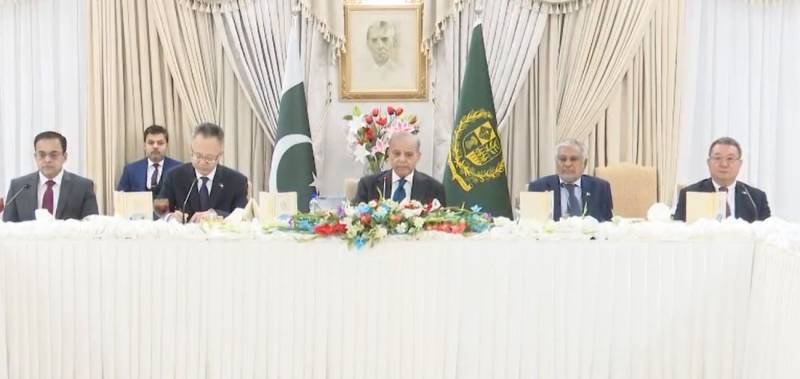
Islamabad (Web Desk): Prime Minister Shehbaz Sharif on Friday said that Pakistan had moved through a challenging phase of economic recovery by carrying out extensive fiscal, structural and governance reforms.
He made the remarks during a breakfast meeting hosted in honour of Asian Development Bank (ADB) Vice President for South, Central and West Asia Yingming Yang.
PM Shehbaz said that the government’s reform measures had helped bring greater stability to the country’s economy, restore confidence among investors and secure improved stable outlooks from major global credit rating agencies, including Fitch, Moody’s and S&P.
During the meeting, the two sides reviewed Pakistan’s decades-long development partnership with the ADB and discussed key areas of cooperation under the newly developed Country Partnership Strategy (CPS) for 2026–2030.
Welcoming Yingming Yang to Pakistan on his first official visit in his present position, Shehbaz Sharif praised the ADB for its continued professional support and responsiveness in carrying out major projects related to urban infrastructure, transportation and public services.
The prime minister reiterated that the government remained focused on bringing lasting changes to the national economy.
He said administrative hurdles were being removed through specially established execution task forces to ensure that development plans were implemented effectively and without unnecessary delays.
Prime Minister Muhammad Shehbaz Sharif hosted a breakfast meeting in honour of Asian Development Bank (ADB) Vice President for South, Central, and West Asia, Mr. Yingming Yang.
— Prime Minister's Office (@PakPMO) September 4, 2026
The meeting reviewed the multi-decade development partnership and chart out priority interventions… pic.twitter.com/pSJ7MKMloh
The proposed modernisation of the Main Line-1 (ML-1) railway network, which links Karachi with Peshawar, remained a key point of discussion.
PM Shehbaz described the railway corridor as an important national infrastructure project and stressed that its upgradation would play a major role in improving freight movement, boosting regional trade links and facilitating large-scale industrial activity.
The meeting also emphasised the importance of launching construction work on ML-1 at the earliest, given the project’s significance for improving Pakistan’s infrastructure and strengthening connectivity across the country.
The discussions then turned to expanding cooperation across a range of economic sectors. Both sides considered ways to promote private-sector investment and assist small and medium-sized enterprises, while also focusing on energy security, food security, export competitiveness, artificial intelligence and information technology.
The meeting concluded with both sides expressing their resolve to turn the priorities outlined in the CPS 2026–2030 into practical and high-impact initiatives.
The aim, they agreed, is to support sustainable economic expansion and bring a visible improvement in the living standards of people across Pakistan.
Neo News | Copyright © 2026