Thu, September 17, 2026

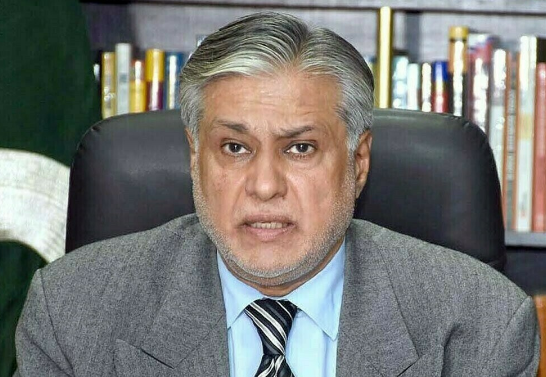
Istanbul (Web Desk): Deputy Prime Minister and Foreign Minister Ishaq Dar said Pakistan and Türkiye are prepared to build a shared future based on prosperity, innovation and regional stability, urging stronger economic cooperation between the two countries.
Addressing the Pakistan–Türkiye B2B Conference in Istanbul, Dar said the two nations have consistently supported each other on issues of regional peace, security, humanitarian assistance and matters of core national interest.
He said the deep political trust between Islamabad and Ankara should now be transformed into a vibrant and mutually beneficial economic partnership.
He noted that the global economic landscape is undergoing rapid change due to geopolitical competition, technological advancements, shifting supply chains, the energy transition and evolving trade and investment trends.
He said Pakistan and Türkiye, located at the crossroads of Europe, Asia, the Middle East and Central Asia, are well positioned to connect regional markets and unlock new economic opportunities.
Dar stressed that the two countries should capitalize on their strategic location by expanding trade, investment and industrial cooperation.
He said diplomacy today extends beyond political engagement and has become a powerful tool for promoting economic growth and prosperity.
He called on Pakistan's embassies, commercial missions, investment promotion agencies and business organizations to work together to facilitate trade, attract foreign investment and remove obstacles faced by entrepreneurs.
The deputy prime minister said the government has introduced wide-ranging economic reforms aimed at strengthening macroeconomic stability, restoring investor confidence and creating a business-friendly environment.
Inviting Turkish investors to explore Pakistan's growing market, Dar highlighted investment opportunities in energy, mining and minerals, power infrastructure, information technology, manufacturing, agriculture, logistics, tourism and the defence industry.
He said these sectors offer significant potential for investment, technology transfer, industrial modernization and employment generation.
Earlier, addressing the conference, Energy Minister Sardar Awais Ahmad Khan Leghari said Pakistan has implemented major structural reforms in the power sector, reducing distribution inefficiencies by more than 45% over the past two years.
He said electricity distribution companies have been restructured and prepared for privatization as part of reforms focused on efficiency, transparency and improved service delivery.
He added that the government has also passed legislation preventing the establishment or acquisition of new power generation companies by the state in the future.
Leghari said Pakistan has introduced competitive electricity markets and established an Independent System and Market Operator to ensure transparent and efficient power dispatch.
He added that the National Grid Company has been divided into two entities, improving operational efficiency.
Highlighting investment prospects, the minister said the government is modernizing and digitizing electricity metering systems to reduce losses, curb power theft and enhance transparency.
He said the power sector offers investment opportunities worth more than $1.7 billion over the next two to three years.
He added that the transmission sector presents an additional investment potential of around $830 million over the next four years, while two major infrastructure clusters worth $518 million and $312 million are under development, with completion targeted by 2030.
Feasibility and environmental studies are underway, and bankable studies are expected next month, allowing investors to participate in individual projects.
Leghari also pointed to expanding opportunities in battery energy storage systems, describing them as essential for grid stability and Pakistan's transition to a modern, reliable and sustainable power network.
Meanwhile, Information Technology and Telecommunication Minister Shaza Fatima Khawaja said Pakistan's IT exports have grown by more than 20% annually over the past three years, reaching $4.5 billion.
She said Pakistani freelancers contributed $1.1 billion to exports this year, while more than 26,000 IT companies and 75,000 technology graduates are driving the country's expanding digital economy.
Shaza Fatima added that Pakistan is the world's fourth-largest provider of outsourced services and has a young population of over 150 million people under the age of 35.
She also noted that Pakistan has more than 200 million telecom subscribers, including 157 million mobile internet users, with 97% of the population covered by 3G and 4G services.
She said 5G has already been introduced in 11 cities and highlighted investment opportunities in cybersecurity, semiconductors, satellite technology and data centres.
Neo News | Copyright © 2026