Thu, September 17, 2026

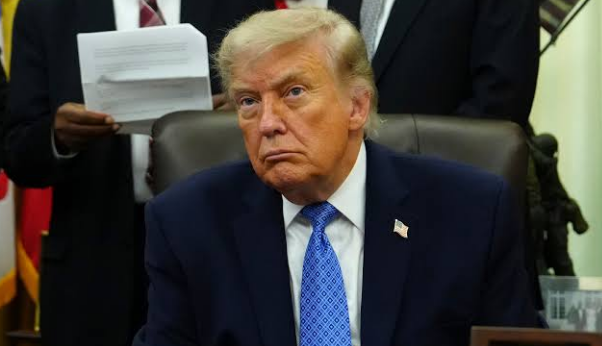
Washington (Web Desk): US President Donald Trump on Monday maintained that dialogue between Washington and Tehran was still underway, despite Iran’s repeated insistence that no such negotiations were taking place.
He also warned that Iran was running out of time to reach an agreement, describing the current moment as its final opportunity before facing devastating consequences.
While speaking to reporters at the White House, Trump said he had chosen to continue diplomatic efforts after receiving requests from Saudi Arabia, the United Arab Emirates, Qatar and several other regional partners urging the United States to keep pursuing a peaceful resolution.
Although Iran’s Foreign Ministry rejected claims of direct talks with Washington, Trump dismissed those statements, saying discussions were actively taking place.
He said Iran had one final chance to approve what he described as a favourable agreement, adding that he wanted to exhaust every diplomatic option before resorting to harsher measures.
Trump said that the discussions are primarily focused on restoring navigation through the Strait of Hormuz, which he suggested could happen as early as the next day. He added that addressing Iran’s nuclear programme would likely require a longer process.
Hostilities between the United States and Iran have continued since February 28, when coordinated US and Israeli strikes targeted Iranian sites. Although intermittent diplomatic contacts have produced temporary periods of reduced tensions, the conflict has remained unresolved for more than five months.
Iran still possesses the capability to launch missiles and drones against American and allied interests in the region and continues to retain its stockpile of enriched uranium.
Meanwhile, Britain’s UK Maritime Trade Operations (UKMTO) reported early Tuesday that an unidentified cargo ship had been struck by an unknown projectile in the Strait of Hormuz near Oman.
The agency said an investigation was underway but did not provide information regarding the extent of the damage or whether anyone had been injured.
Trump’s latest comments followed a familiar pattern. Just days earlier, he had warned that Iran could face major new military strikes, including attacks on its energy infrastructure.
However, by Saturday he softened his stance, saying the outlines of a possible agreement were already visible.
Iran, however, continued to deny any direct negotiations with the United States. Foreign Ministry spokesman Esmaeil Baqaei said Tehran’s only ongoing discussions were with Oman and were aimed at ensuring safe transit through the strategically important Strait of Hormuz.
The waterway remains one of the biggest obstacles to ending the conflict. After an earlier ceasefire collapsed, Iran reinstated a blockade of the strait, disrupting commercial shipping and targeting vessels attempting to pass through the area.
Trump criticised Tehran for what he called contradictory behaviour, accusing the Iranian leadership of publicly denying negotiations while privately engaging in discussions.
In a post on social media, he said the two countries were, in reality, working toward resolving a dispute that had persisted for decades.
The US president also referred to Washington’s restrictions on Iranian ports, declaring that nothing would enter Iran unless the United States permitted it.
He added that these restrictions would remain until either a comprehensive agreement was reached or Iran accepted what he termed total surrender.
Before the conflict began, ships moved freely through the Strait of Hormuz. Iran now insists on controlling the passage and collecting transit fees, a demand the United States rejects.
Tehran has also required vessels to follow a route that remains close to the Iranian coastline.
Trump once again emphasised that eliminating Iran’s nuclear capabilities remained one of Washington’s key objectives.
Western governments continue to accuse Tehran of seeking nuclear weapons, while Iranian authorities maintain that their nuclear programme is intended solely for civilian and peaceful purposes.
During remarks aboard Air Force One over the weekend, Trump also claimed that both Iran and several US allies in the region had urged him to refrain from launching additional military strikes, which he said would have been the largest assault since the Second World War.
Iranian media swiftly rejected that claim, insisting Tehran had made no such appeal.
An earlier ceasefire agreement collapsed last month. That arrangement had been expected to restore unrestricted shipping through the Strait of Hormuz, one of the world’s most important maritime routes for transporting oil and other energy supplies from the Gulf to international markets.
Neo News | Copyright © 2026