Thu, September 17, 2026

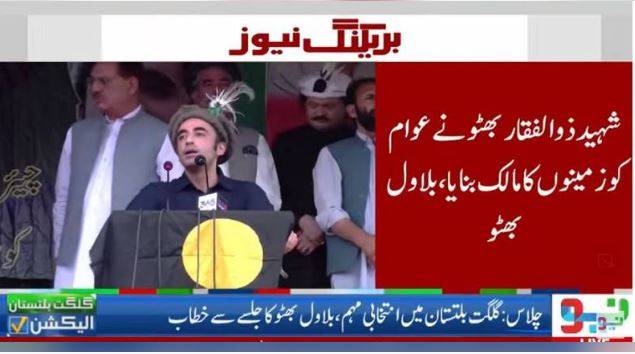
Chilas (Web Desk): Pakistan Peoples Party (PPP) Chairman Bilawal Bhutto Zardari has described the upcoming Gilgit-Baltistan elections as a decisive moment, expressing confidence that voters will shape a new political chapter through the power of their ballots on June 7.
Addressing a massive election rally in Chilas, Bilawal strongly criticized rival political parties, accusing them of attempting to influence the electoral process through “management tactics” after failing to win public support.
He maintained that PPP has always trusted the people's verdict and predicted that the party would form the next government in Gilgit-Baltistan.
Responding to development claims made by Pakistan Muslim League (N), Bilawal argued that many of the country’s major infrastructure projects were made possible due to the policies of President Asif Ali Zardari.
He said that without the China-Pakistan Economic Corridor (CPEC), which he credited to Zardari’s efforts, projects such as the Orange Line Metro Train in Lahore would not have materialized.
The PPP chairman further stated that Asif Zardari laid the foundations for national development by handing over the management of Gwadar Port to China, expanding healthcare services, and strengthening democracy by transferring presidential powers back to parliament during his tenure.
Turning to the issue of the Diamer-Bhasha Dam, Bilawal criticized the federal government and claimed that PPP had carried out the most substantial work on the project. He said that had his party’s government not been removed in 2013, the dam would already be operational today.
He urged the federal authorities to prioritize the completion of the dam to safeguard the rights and interests of the people of Gilgit-Baltistan.
Defending PPP’s historical legacy, Bilawal said the party’s founder, Zulfikar Ali Bhutto, granted land ownership rights to underprivileged communities and that PPP played a key role in securing identity and constitutional rights for the people of Gilgit-Baltistan.
He also highlighted the party’s resistance against military rule, saying PPP had confronted not one but two dictatorships.
According to Bilawal, opponents believed the party would collapse after the assassination of Benazir Bhutto, but Asif Zardari thwarted those expectations and kept the party united, enabling its workers to remain politically active and resilient.
Neo News | Copyright © 2026