Thu, September 17, 2026

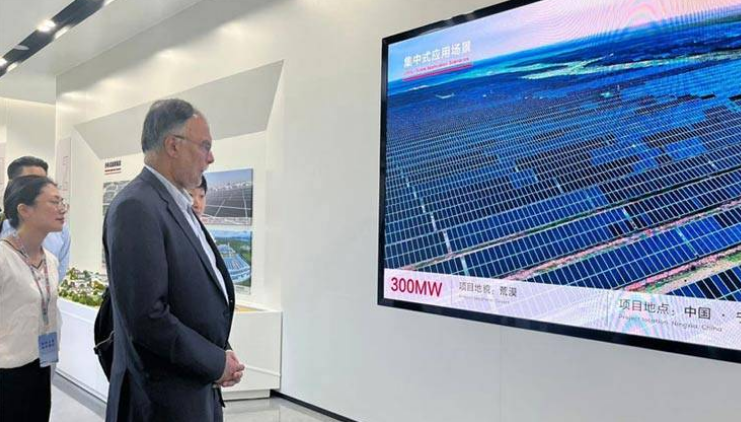
Tianjin (Web Desk): Federal Minister for Planning, Development, and Special Initiatives Ahsan Iqbal has reaffirmed that the second phase of the China-Pakistan Economic Corridor (CPEC 2.0) will significantly elevate bilateral collaboration between Pakistan and China.
His remarks came during a visit to Tianjin, where he participated in discussions on the sidelines of the Shanghai Cooperation Organization (SCO) Summit, focusing on potential opportunities for Pakistan in the evolving scope of CPEC.
Tianjin, a key economic and industrial city in northern China, houses the region's largest port and serves as a global center for trade and finance.
While in the city, the minister emphasized Pakistan’s intent to deepen its partnership with China in critical sectors essential to the country’s long-term development. He noted that CPEC 2.0 opens new doors for strengthening Pakistan’s capabilities in port infrastructure, renewable energy, and the livestock industry.
As part of his visit, Ahsan Iqbal toured the Huan Sheng New Energy Solar Plant—an advanced, fully automated solar manufacturing facility regarded as a leader in Fourth Industrial Revolution technologies. He commended China’s progress in solar innovation and expressed Pakistan’s readiness to embrace similar advancements.
Describing clean energy as the future, he extended an open invitation to Chinese companies to explore investment opportunities in Pakistan’s expanding renewable energy market. He added that ventures in solar and green technologies would help the country address both sustainability targets and energy needs.
The minister also visited a prominent Chinese enterprise specializing in the development of animal vaccines, where discussions were held regarding the possibility of setting up a manufacturing unit in Pakistan.
He stated that both sides are actively engaged in exploring the project, highlighting its importance in controlling animal diseases and boosting meat exports.
Stressing the value of livestock to Pakistan’s agricultural economy, he said that improving animal health and expanding export potential are among the country’s key priorities.
Ahsan Iqbal further laid out Pakistan’s plan to establish cutting-edge research centers with Chinese collaboration, aimed at encouraging innovation, knowledge sharing, and the transfer of technology.
These centers, he said, will act as a foundation for future progress. He added that Pakistan, with China’s support, is pushing forward with comprehensive cooperation in agricultural biotechnology to enhance crop productivity, ensure food security, and uplift rural communities.
Reiterating the government’s dedication to maximizing the potential of CPEC’s second phase, he explained that the initiative marks a strategic transition from infrastructure-centric projects to a broader focus on industrial modernization, technological advancement, and environmental sustainability.
Ahsan Iqbal said that the foundation built during the first phase will now support Pakistan’s journey toward a more diverse, innovative, and climate-adaptive economy.
The planning minister expressed confidence that with China's expertise and investment, Pakistan-China ties under CPEC 2.0 will reach unprecedented levels of cooperation and shared growth.
Neo News | Copyright © 2026