Thu, September 17, 2026

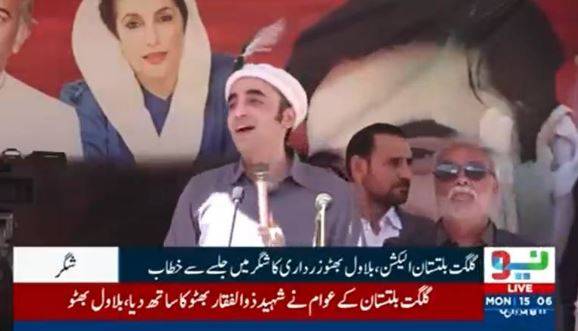
Shigar (Web Desk): Pakistan Peoples Party (PPP) Chairman Bilawal Bhutto Zardari has called on the federal government to immediately abolish the ministries responsible for Azad Jammu and Kashmir (AJK) and Gilgit-Baltistan (GB), arguing that decisions concerning these regions should be made by local people rather than bureaucrats in Islamabad.
Addressing a large public gathering in Gulabpur, Shigar, Bilawal said that no bureaucrat sitting in the federal capital could effectively decide the future of Shigar, Gwadar, or Gilgit-Baltistan.
He maintained that if these ministries constantly complain about a lack of funds and resources, there is little justification for their continued existence, and their powers should instead be devolved to local communities.
Highlighting the long-standing relationship between the PPP and the people of Gilgit-Baltistan, Bilawal said the bond spans three generations.
Referring to the previous elections, he alleged that nine PPP seats had been “stolen,” but claimed that even with only three seats, the party had worked to address the region’s problems.
The PPP chairman called for transparent elections and urged voters to actively participate in the next polls. He encouraged the public to safeguard Form-45 results, while assuring them that he would handle any issues related to Form-47 through political and legal channels.
Bilawal stressed that the PPP had never sought power through selection or manipulated election results and reiterated his demand that Gilgit-Baltistan elections be held simultaneously with Pakistan’s general elections.
He said this would help ensure that the people of the region receive the same constitutional rights guaranteed under the 18th Amendment.
During his speech, Bilawal recalled the achievements of the late Zulfikar Ali Bhutto, including providing the country with a consensus constitution, laying the foundation for Pakistan’s nuclear programme, and introducing a wheat subsidy for the people of Gilgit-Baltistan.
Speaking on economic development, he pointed to the success of public-private partnership projects in Sindh and the Thar coal initiative.
Bilawal described Sindh’s coal reserves as being as valuable as Saudi oil and said the resource had been neglected for decades before being utilized to generate electricity that now reaches Faisalabad.
On the Benazir Income Support Programme (BISP), Bilawal described it as a vital support system for low-income families. He rejected proposals to transfer the programme to provincial governments, calling such suggestions an attempt to undermine or dismantle BISP.
He expressed hope that the prime minister would allocate additional funding for the programme in the upcoming federal budget.
Concluding his address, Bilawal praised Pakistan’s diplomatic efforts in helping secure a ceasefire between the United States and Iran and expressed hope that the country’s peace initiatives would succeed in protecting innocent lives from the devastation of war.
Neo News | Copyright © 2026