Thu, September 17, 2026

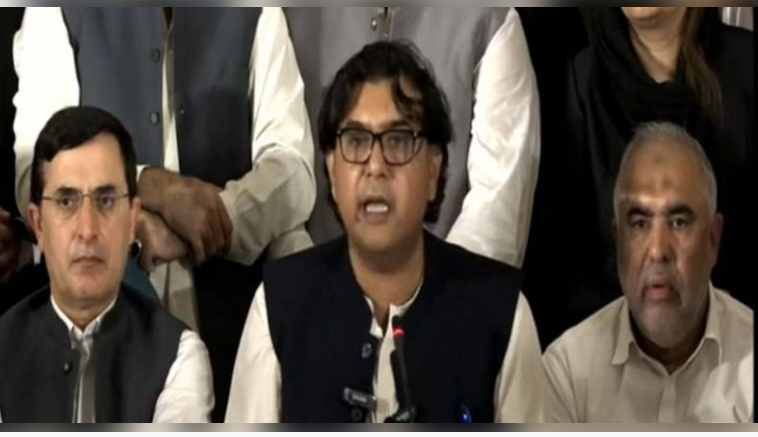
Islamabad (Web Desk): A coalition of opposition parties raised their concerns on Friday over what they described as the rapid decline of democratic freedoms in Pakistan, accusing the incumbent government of muzzling dissent and disregarding constitutional principles.
The gathering, held under the banner of Tehreek-e-Tahafuz-e-Ayeen-e-Pakistan (TTAP), concluded its two-day multi-party conference with a unified call for a renewed Charter of Democracy aimed at restoring constitutional order and safeguarding democratic values.
Speaking to the media after the conference, senior political leader Mustafa Nawaz Khokhar, lamented that opposition voices were being systematically marginalized and denied space to operate freely.
He pointed to what he described as state interference in political activities, including restrictions on public assemblies, which he argued were a direct violation of the Constitution.
Khokhar further noted that deepening economic distress was pushing entrepreneurs and professionals to seek opportunities abroad, highlighting that nearly half the population now lives below the poverty threshold, while joblessness has surged to 20%.
Reading out a joint declaration of the conference, Khokhar demanded that Pakistan Tehreek-e-Insaf (PTI) founder Imran Khan and his spouse Bushra Bibi be freed immediately, with their pending legal cases brought promptly before the Islamabad High Court.
The conference, which brought together various opposition parties, members of the legal fraternity, and journalists, voiced unanimous condemnation of what they termed growing authoritarianism and politically motivated retribution.
The declaration criticized recent rulings against opposition lawmakers in both the Senate and National Assembly, labeling them unjust and orchestrated. It warned that Pakistan’s democratic framework and civil liberties were in a state of severe deterioration and urged political stakeholders to come together to craft a new, mutually agreed Charter of Democracy.
Among the proposed measures were the establishment of a Truth and Reconciliation Commission, practical steps to guarantee press independence, and provisions to ensure the rights of women and promote education as core elements of any future political pact.
In addition, the resolution called on the federal government to restore constitutionally granted powers to the provinces and reverse the 26th Constitutional Amendment. It advocated for a transparent process in the appointment of judges, praising six judges who had raised alarms about external interference in judicial affairs, declaring them national heroes for their stance.
Participants at the conference categorically rejected the outcome of the 2024 general elections, asserting that the process lacked credibility. They demanded a reformed, autonomous Election Commission to oversee future electoral exercises.
Regional grievances were also brought to the forefront, with delegates affirming that Balochistan’s natural resources rightfully belong to its people and demanding that all missing persons be brought before courts without delay.
The gathering emphasized that maintaining law and order should fall under civilian institutions rather than military control and pressed for the removal of barriers faced by religious pilgrims traveling overland for Arbaeen.
The conference also pushed for the reopening of traditional trade routes across borders, reinstatement of the Khyber Pakhtunkhwa High Court’s decision on the Action in Aid of Civil Power Regulations, and withdrawal of the Supreme Court appeal filed by the PTI-led provincial administration.
The equitable distribution of water according to the 1993 agreement was reaffirmed, alongside opposition to canal construction projects that threaten the ecological integrity of the Indus Delta.
The forum advocated for a shift in how Senate members are elected—proposing direct public elections—and urged that they be accorded equal legislative authority as National Assembly representatives.
It further recommended elevating Gilgit-Baltistan to full provincial status and underscored the importance of rebuilding inter-party cooperation as a prerequisite for national progress.
The declaration included a strong rebuke of media censorship and urged the elimination of harmful tribal customs that perpetuate injustices against women.
Regarding international front, the conference called for Israel’s Prime Minister to be declared a war criminal and prosecuted at the International Court of Justice, citing violations of humanitarian law.
Neo News | Copyright © 2026