Thu, September 17, 2026

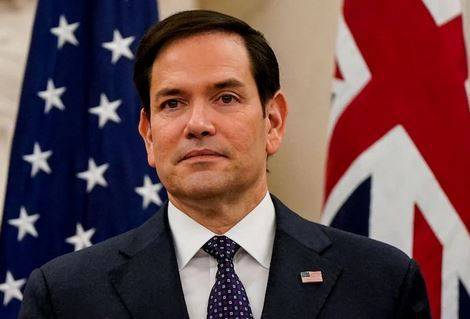
Helsingborg, Sweden (Web Desk/Agencies): United States (US) Secretary of State Marco Rubio on Friday said that discussions involving Iran had made what he described as only limited forward movement, characterising the development as modest rather than substantial.
While attending a North Atlantic Treaty Organization (NATO) foreign ministers’ gathering in Helsingborg, Sweden, Rubio briefed journalists ahead of the meeting, which also included NATO Secretary General Mark Rutte. He noted that any progress remained cautious and far from decisive.
“There's been some slight progress, I don't want to exaggerate it, but there's been a little bit of movement, and that's good,” Rubio told reporters ahead of a NATO foreign ministers meeting alongside NATO Secretary General Mark Rutte.
Reiterating the long-standing US position, Rubio stressed that the central concerns had not shifted, particularly regarding Iran’s nuclear ambitions. “Iran can never have nuclear weapons, it just cannot make them.”
He further explained that Washington was still monitoring the outcome of ongoing diplomatic exchanges, especially those related to uranium enrichment activities and Iran’s reserves of highly enriched uranium, which he said would need to be dealt with in any meaningful arrangement.
Rubio also levelled accusations against Iran, claiming it was seeking to establish a “tolling system” in the Strait of Hormuz, and suggested that Tehran was trying to bring Oman into the arrangement. He firmly rejected the idea, arguing that it would be unacceptable to the international community.
“There is not a country in the world that should accept that,” he said, calling the idea “not acceptable.”
He went on to warn of wider implications if such a move were implemented in the Strait of Hormuz, suggesting it could encourage similar actions in other strategic maritime corridors. “If that were to happen in the Straits of Hormuz, it will happen in five other places around the world,” Rubio added.
The US top diplomat also said that efforts were underway at the United Nations on a resolution introduced by Bahrain, related to the same concerns, and claimed it had received considerable international support.
“Let's see if the United Nations still works,” Rubio said, while criticising unnamed members of the Security Council who he suggested might be considering blocking the measure through a veto.
Meanwhile, NATO Secretary General Mark Rutte said the agenda for the meeting centred on defence budgets, ongoing support for Ukraine, and the protection of free maritime passage, especially amid heightened tensions involving Iran and the Strait of Hormuz.
“I hear from many of my colleagues here that it is not acceptable that the freedom of navigation is basically trampled upon as it is at the moment,” Rutte said.
He also expressed appreciation for continued American assistance to Ukraine, particularly in relation to interceptor defence systems financed by European and Canadian partners.
Rubio further remarked that the upcoming NATO leaders’ summit in Ankara would stand out as “one of the more important leaders' summits in the history of NATO,” pointing to defence industrial output, burden-sharing among allies, and broader global security challenges as key issues on the agenda.
Neo News | Copyright © 2026