Thu, September 17, 2026

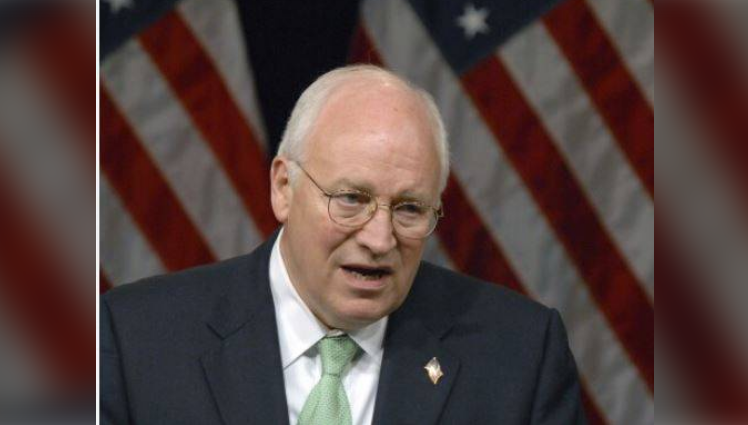
Washington (Web Desk/Agencies): Former US Vice President Dick Cheney, a central figure behind the 2003 Iraq invasion and long considered one of the most dominant vice presidents in American history, has died at the age of 84, his family confirmed on Tuesday. They said he passed away on Monday due to complications stemming from pneumonia along with cardiac and vascular diseases.
A Republican heavyweight, Cheney had already built an extensive career in Washington as a Wyoming congressman and later as defense secretary before being chosen by then–Texas Governor George W. Bush as his running mate in the 2000 presidential election.
When the Bush-Cheney ticket won, he assumed the vice presidency from 2001 to 2009 and worked to strengthen the authority of the presidency, believing it had diminished since the Watergate scandal that ended Richard Nixon’s presidency, under whom Cheney once served.
As vice president, Cheney expanded the influence of his office by assembling a strong national security team that frequently operated as a parallel power center within the administration.
A staunch supporter of the Iraq War, he played a leading role in advocating for the 2003 invasion and repeatedly warned about Saddam Hussein’s supposed stockpile of weapons of mass destruction — weapons that were never found. Cheney’s assertive approach often led to clashes with senior Bush officials, including Colin Powell and Condoleezza Rice. He also stood by the use of “enhanced interrogation” methods such as waterboarding, which international observers and U.S. agencies later labeled as torture.
His daughter Liz Cheney followed him into politics, serving as a Republican congresswoman. She lost her seat after opposing Donald Trump and voting to impeach him over the January 6, 2021 Capitol attack.
Her father backed her stance, later declaring that he would support Democratic candidate Kamala Harris in the 2024 election, calling Trump “the greatest threat to the republic in American history.”
Cheney battled heart disease throughout his life, suffering his first heart attack at 37 and undergoing a heart transplant in 2012. Alongside Defense Secretary Donald Rumsfeld, he was one of the most forceful advocates for invading Iraq in 2003. In the lead-up to the war, Cheney suggested links between Iraq, al-Qaeda, and the 9/11 attacks — a claim later dismissed by the 9/11 Commission.
He predicted that US troops would be welcomed as liberators and the conflict would last only weeks. Despite no discovery of weapons of mass destruction, Cheney later maintained that the war had been justified based on the intelligence available and the removal of Saddam Hussein from power.
More than a decade earlier, as defense secretary under President George H. W. Bush, Cheney oversaw Operation Desert Storm, which expelled Iraqi forces from Kuwait. Although he advocated a firm stance against Saddam Hussein at that time, he opposed an invasion of Iraq, warning it could lead to a prolonged conflict.
Due to his long-standing ties with the Bush family and deep experience in government, George W. Bush initially asked Cheney to lead the search for a vice presidential candidate in 2000 but later concluded Cheney himself was the ideal choice.
Upon re-entering public office, Cheney received a $35 million retirement package from Halliburton, the oil services company he led from 1995 to 2000. The firm later became one of the major contractors during the Iraq War, drawing criticism from war opponents who cited his corporate connections.
Richard Bruce Cheney was born in Lincoln, Nebraska, on January 30, 1941 — the same day President Franklin D. Roosevelt turned 59. His mother, Marjorie Lorraine, worked as a waitress and softball player, while his father, Richard Herbert Cheney, was employed by the Soil Conservation Service.
Both sides of his family were devoted New Deal Democrats, as he noted in his memoir In My Time. His grandfather, proud of the coincidence of Cheney’s birth date with the president’s birthday, even sent a telegram to the White House to share the news.
Cheney later remarked that he was probably the first Republican in his family since his great-grandfather, who fought for the Union during the Civil War.
Raised in Wyoming, Cheney went on to attend Yale University but dropped out, later admitting that he had been “a mediocre student at best.”
Neo News | Copyright © 2026